

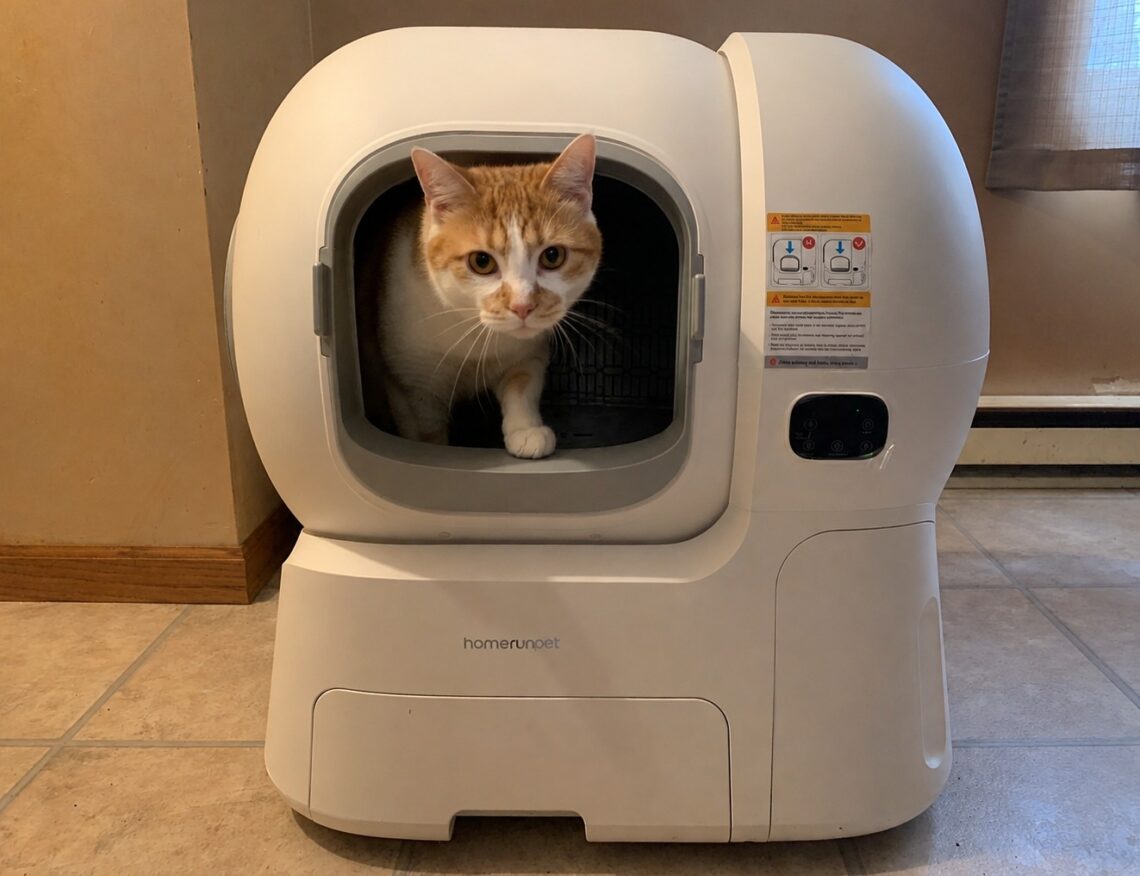
If you have a Maine Coon, Norwegian Forest Cat, Ragdoll, or even just a particularly substantial domestic shorthair (like my Luke), you’ve probably discovered that a lot of things labeled “large” in the cat world really aren’t.
Litter boxes are a perfect example.
A box that seems enormous sitting on the store shelf can suddenly look like a shoebox when your 18-pound cat climbs inside. And while cats are remarkably talented at squeezing themselves into ridiculously small spaces when they want to, their litter box is one place where they shouldn’t have to.
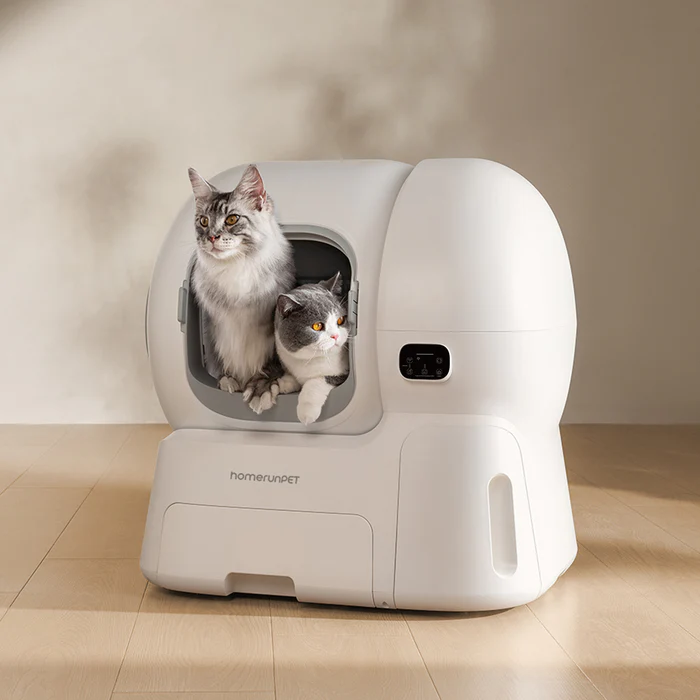
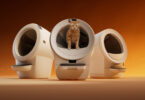
If you’re looking for an automatic option with more room for a bigger cat, the HomerunPET CS106 Self-Cleaning Litter Box is one worth checking out.
The HomerunPET CS106 is one of the largest automatic litter boxes I’ve tested, with a roomy 106L dome and oversized 12L waste bin. Designed for big cats and real multi-cat homes, it also features an auto-refill system, ultra-quiet operation, and strong safety sensors. If you want a more hands-off litter setup, this one delivers.
BEST PRICE GUARANTEE
SAVE $60 WITH COUPON CODE PAWZ
Quick Answer: What Size Litter Box Does a Large Cat Need?
As a general rule, the litter box should be at least 1.5 times the length of your cat from nose to the base of the tail. Width matters too. Your cat should be able to walk inside, turn around completely, dig, squat comfortably, and choose a new position without bumping into the walls.
For large cats, though, there’s a little more to consider than simply pulling out a tape measure.
For an average cat, you can often get away with a standard large litter box. Once you get into Maine Coon territory, I’d look for something significantly roomier.
A large cat generally needs a litter box with:
- Enough usable floor space to turn around easily
- At least 1.5 times the cat’s body length, measured from the nose to the base of the tail
- Enough width for comfortable digging and positioning
- An entrance that’s easy to step through
- Adequate headroom if you’re using an enclosed litter box
That last point is especially important with automatic litter boxes.
A self-cleaning box can have impressive exterior dimensions while providing surprisingly little usable space inside. The size of the opening, interior chamber, and actual litter bed matters much more than how big the machine looks sitting in your laundry room.
One example designed with this problem in mind is the HomerunPET CS106 Self-Cleaning Litter Box. Its open, spacious design makes it worth considering for households with bigger cats, particularly if you’ve been hesitant to try an automatic litter box because many enclosed models look too cramped.
But whether you’re shopping for an automatic box like the CS106 or a $15 plastic litter pan, the same basic rule applies: judge the space your cat can actually use, not the overall dimensions of the box.
Why Does Litter Box Size Matter So Much?
Imagine trying to use a bathroom where your knees hit the wall, you can’t turn around properly, and you have to duck your head the entire time.
You’d probably start looking for another bathroom. Cats aren’t all that different.
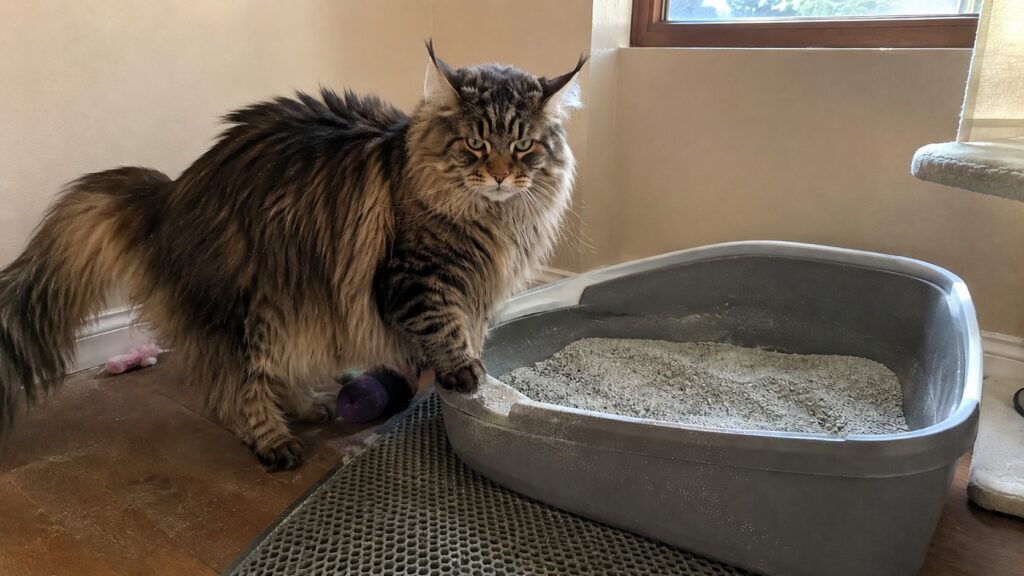
Before going potty, most cats perform a whole little routine. They may inspect several spots, sniff the litter, turn around, dig, reposition themselves, go, turn again, and cover everything. Luke spends a good 2 minutes of “prep work” before he even does his business. A box that’s too small interferes with that normal behavior.
You might notice your cat:
- Standing partly outside the box
- Perching on the edge
- Peeing close to the entrance or over the edge
- Scratching the sides instead of the litter
- Not covering waste
- Entering the box and immediately leaving
- Avoiding the litter box altogether
Not every litter box problem is caused by size, of course. Medical problems, litter preferences, cleanliness, location, stress, conflict between cats, and accessibility can all affect litter box use.
But before assuming your cat has suddenly developed a behavioral issue, take a good look at the bathroom you’ve provided. Sometimes the problem really is that your cat simply doesn’t fit.
The 1.5-Times Rule for Litter Box Size
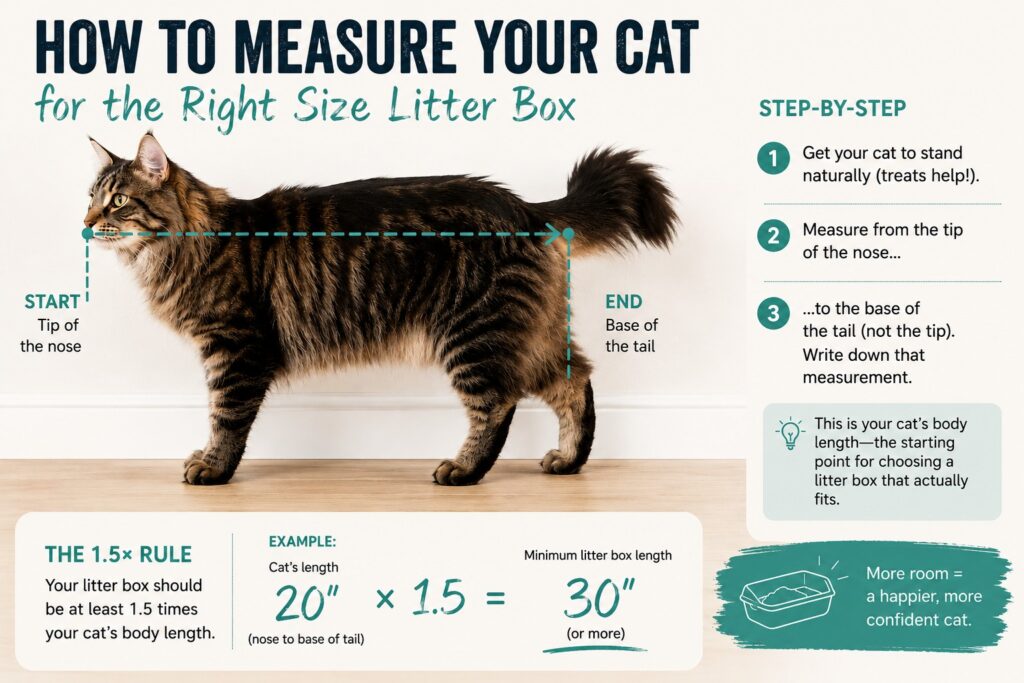
One of the most commonly recommended guidelines is to choose a litter box approximately 1.5 times the length of your cat.
The important part is knowing how to measure your cat.
Measure from the tip of the nose to the base of the tail, not all the way to the end of the tail (thank goodness, otherwise I’d need a 4-foot litter box for Luke!)
For example, suppose your cat measures 20 inches from nose to tail base:
20 inches × 1.5 = 30 inches
Ideally, you’d look for a litter box approximately 30 inches long. And yes, that’s a pretty big litter box.
That’s also why finding an appropriately sized commercial box for a very large cat can be surprisingly difficult.
The 1.5-times guideline isn’t an absolute mathematical requirement. It’s not like a 29-inch box will automatically fail a cat that technically needs 30 inches of space. Think of it as a practical starting point.
The real test is whether your cat has enough room to move naturally.
How Wide Should a Large Cat’s Litter Box Be?
Length gets most of the attention, but width is just as important. Your cat needs enough room to turn around without folding themselves into a furry pretzel.
This is where it’s a bit trickier, though. There’s no single width that works for every large cat because cats with similar body lengths can have very different builds. A lanky 15-pound cat and a broad, heavily built 15-pound cat don’t necessarily need the same amount of space.
Instead, watch your cat inside the box. They should be able to:
- Enter without squeezing through the opening.
- Stand with all four paws comfortably inside.
- Turn around without pressing against the walls.
- Dig without constantly hitting the sides.
- Squat without their rear end hanging outside.
- Reposition before covering their waste.
If they can’t do those things comfortably, the box is probably too narrow regardless of what size is printed on the packaging.
Large Cats Need Usable Space, Not Just a Large Footprint
This difference becomes especially important when comparing traditional and automatic litter boxes.
With a basic rectangular litter pan, the exterior and interior dimensions are relatively similar. If the box is 30 inches long, your cat can probably use most of those 30 inches.
Automatic litter boxes are different.
Motors, waste drawers, sensors, rotating mechanisms, walls, liners, and other components all take up space.
You could theoretically have two automatic litter boxes with similar exterior dimensions but dramatically different amounts of room for the cat.
That’s one reason I like looking beyond the footprint when evaluating automatic boxes for larger cats.
Pay close attention to its open entrance and usable interior area rather than simply comparing its overall measurements to another automatic box.
For big cats, the question isn’t, “Will this machine fit in my house?” It’s, “Will my cat fit comfortably inside the part that’s actually meant for the cat?” Those are two very different measurements.
What About Automatic Litter Boxes for Maine Coons and other XXL Cats?
Automatic litter boxes can absolutely work for Maine Coons and other large cats, but this is one category where you really need to pay close attention to ALL of the dimensions.
Look at the recommended cat weight, entrance dimensions, interior space, litter bed size, and design of the cleaning mechanism.
Weight limits matter because automatic boxes use sensors and moving components. However, a machine being rated for a cat’s weight doesn’t necessarily mean it accommodates that cat’s body size comfortably.
For example, two cats could each weigh 18 pounds while having completely different proportions.
This is where a more open design such as the HomerunPET CS106 Self-Cleaning Litter Box can make sense for larger cats. Rather than forcing a big cat through a relatively small opening into a globe-style chamber, a spacious opening gives them more freedom when entering, exiting, and positioning themselves.
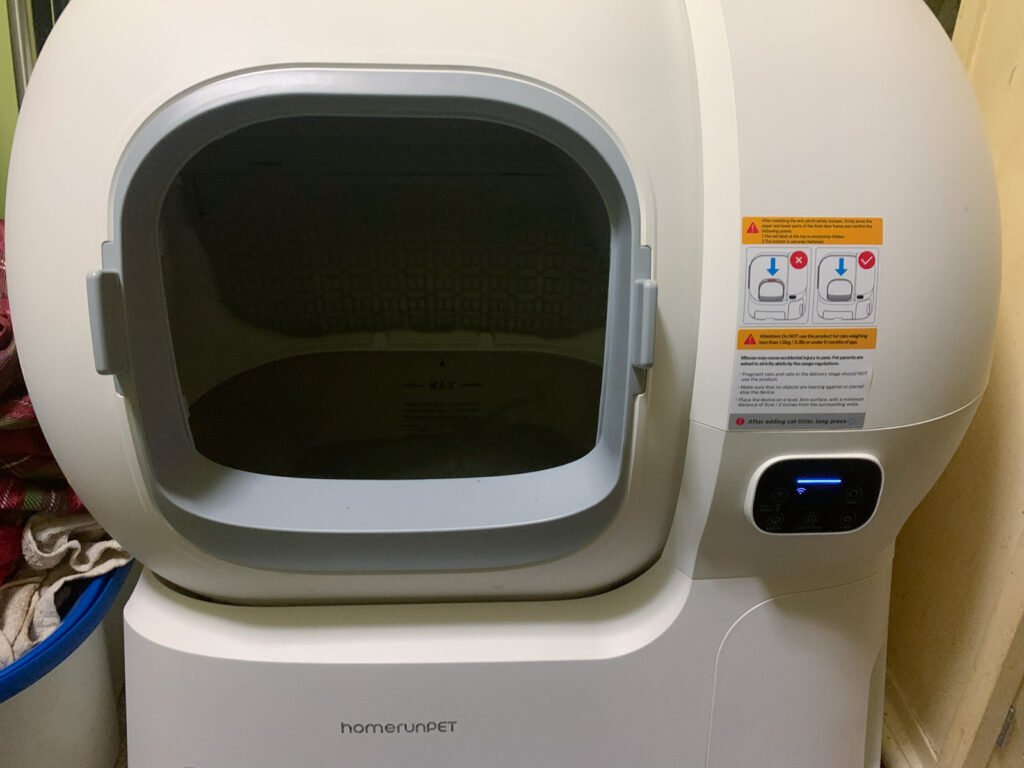
That can also be helpful for cats that simply dislike feeling enclosed.
Regardless of the model, I’d still watch your cat during the transition. Specifications can tell you whether a litter box should accommodate your cat. Your cat will tell you whether they actually agree.
And cats are not known for keeping their opinions to themselves.
Don’t Forget the Entrance Height
Bigger isn’t always better when we’re talking about the entrance. A healthy young Maine Coon may have absolutely no problem stepping over a high wall. In fact, higher sides can be extremely useful for large cats that dig enthusiastically and send litter flying across the room.
But older cats and cats with mobility problems may struggle with a tall entry. That’s why the perfect large-cat litter box often combines:
A large interior + high sides + a reasonably accessible entrance.
You get room and litter containment without forcing your cat to hurdle into the box. If your cat has arthritis, an injury, weakness, or another mobility issue, accessibility may ultimately be more important than finding the mathematically perfect dimensions.
One extra note here: if you have to choose between a litter box that’s low to the ground or one that actually fits your cat, go with the latter. You can always add steps or a stool to help your cat get into the box.
How High Should the Sides Be?
For a large cat that loves digging, you want something with higher sides. There’s simply more cat moving more litter. Automatic litter boxes solve this issue because they’re pretty much fully enclosed. But if you’re going with a standard box, look for something designed for high-peeing males. Why? Because they naturally have higher sides.
High-sided boxes can help contain:
- Kicked litter
- Urine from cats that stand while urinating
- Over-the-edge accidents
- General digging debris
Should You Buy an XL or XXL Litter Box?
Unfortunately, labels such as Large, XL, Jumbo, and XXL aren’t standardized. One company’s “jumbo” may be smaller than another company’s “large.”
Ignore the marketing language and look at the measurements. Better yet, grab a tape measure and compare those dimensions to your cat.
This is especially useful when shopping online because product photos can be incredibly misleading. A litter box photographed with a petite 7-pound cat can look enormous.
Put a 20-pound Maine Coon in the same picture and suddenly the proportions tell a very different story.
Do Large Cats Need More Litter?
A bigger box doesn’t necessarily mean you need six inches of litter. Most cats don’t need an exceptionally deep litter bed. A few inches is generally enough for digging and covering, although individual preferences vary.
With automatic litter boxes, follow the manufacturer’s fill guidelines. Adding more litter than recommended can mess with the cleaning mechanism or sensors. The goal is more surface area, not necessarily greater depth.
Signs Your Large Cat Needs a Bigger Litter Box
Sometimes your cat will make the decision for you.
Take another look at your setup if your cat:
- Regularly hangs their rear end over the edge
- Keeps their front paws outside while eliminating
- Struggles to turn around
- Frequently kicks litter out while trying to reposition
- Scratches walls or the sides of the box rather than the litter
- Avoids covered boxes
- Uses the area directly beside the litter box
- Seems hesitant to enter
- Uses a larger box when given a choice
The last one can be particularly revealing.
If you offer your cat two otherwise similar boxes and they repeatedly choose the larger one, you have a pretty good product reviewer living in your house.
The Bottom Line
So, how big should a litter box be for a large cat?
Start with the 1.5-times rule: the box should ideally be about one and a half times your cat’s length from their nose to the base of their tail.
But don’t get so focused on hitting an exact number that you overlook what really matters.
Your cat should be able to enter easily, stand normally, turn completely around, dig, squat, reposition, and cover their waste without bumping into the walls or hanging out of the box.
For Maine Coons and other large breeds, that often means skipping standard litter boxes entirely and shopping in the XL or XXL range. If you’re considering an automatic option, pay particular attention to usable interior space and the entrance design. Models with roomier, more open layouts, such as the HomerunPET CS106 Self-Cleaning Litter Box, can be especially appealing when you’re trying to combine automatic cleaning with enough space for a big cat.
Ultimately, though, the label on the box matters a lot less than the cat standing inside it.
If your Maine Coon looks like they’re trying to parallel park every time nature calls, go bigger.
The HomerunPET CS106 is one of the largest automatic litter boxes I’ve tested, with a roomy 106L dome and oversized 12L waste bin. Designed for big cats and real multi-cat homes, it also features an auto-refill system, ultra-quiet operation, and strong safety sensors. If you want a more hands-off litter setup, this one delivers.
BEST PRICE GUARANTEE
SAVE $60 WITH COUPON CODE PAWZ



Leave a Comment