

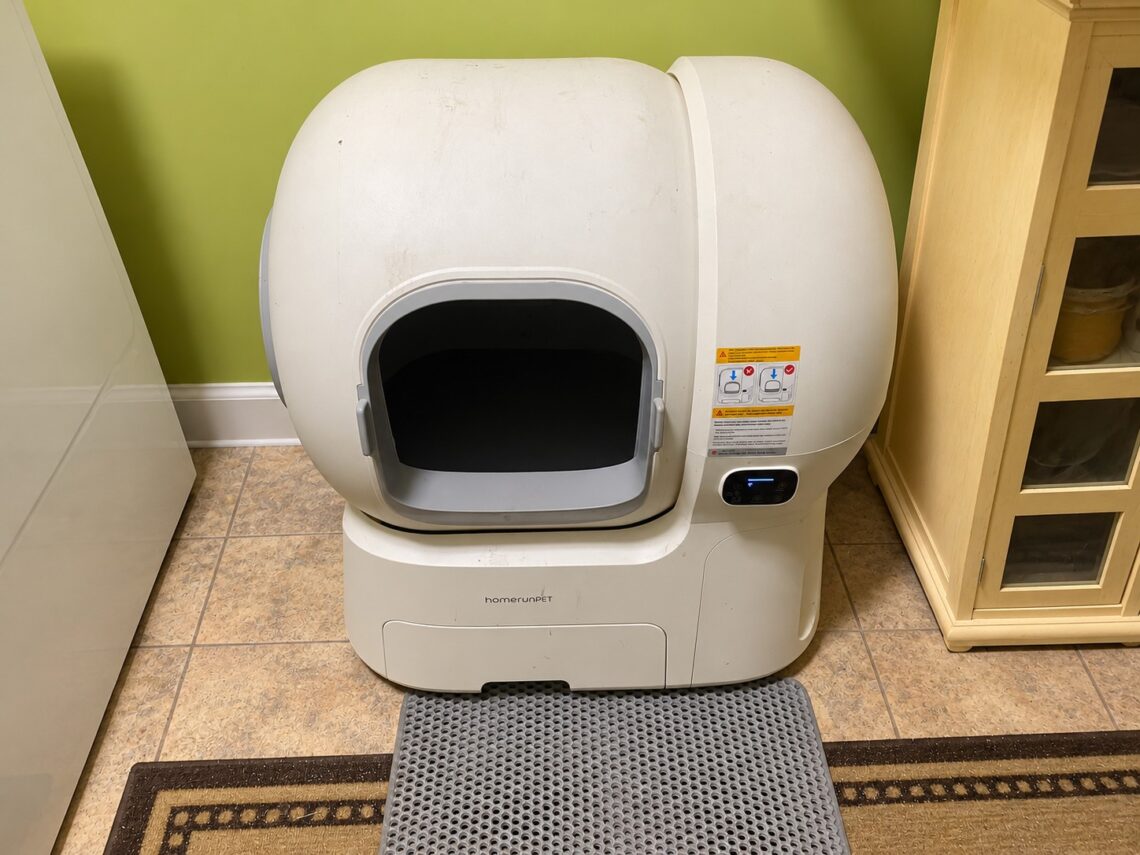
Automatic litter boxes aren’t cheap. Even the more affordable models cost quite a bit more than a regular litter box, so it’s reasonable to expect them to last longer than a few months. But how do you know whether an automatic litter box is actually durable before you buy it? It’s a harder question to answer than you might think.
You can look at the materials, read reviews and compare warranties, but none of those things can tell you exactly how well a particular machine will hold up after months or years of daily use.
And there’s more to durability than whether the plastic cracks or the motor wears out. A smart litter box also needs to remain reliable. The sensors should continue working correctly, the cleaning cycles should run consistently and the app shouldn’t require constant troubleshooting.
I’ve been using the HomerunPet CS106 Self-Cleaning Litter Box for about eight months now, and something recently occurred to me. In all that time, I’ve never had to troubleshoot it. Not once.
No mysterious error codes, no parts coming loose, no sensors suddenly deciding they need attention and no random disconnections from the app.
Now, eight months isn’t five years. I’m certainly not going to claim that my experience proves the CS106 will last forever. But eight months of regular use in a busy multi-cat household is enough to form some pretty solid first impressions.
And so far, mine have been extremely positive. So, let’s talk about what actually makes an automatic litter box durable, what to look for before buying one and why reliability deserves just as much attention as the materials used to build it.
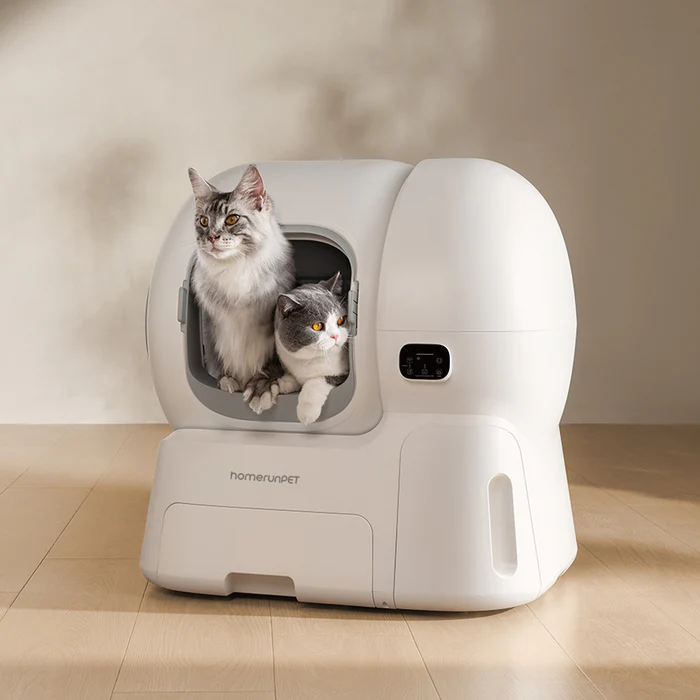
The HomerunPET CS106 is one of the largest automatic litter boxes I’ve tested, with a roomy 106L dome and oversized 12L waste bin. Designed for big cats and real multi-cat homes, it also features an auto-refill system, ultra-quiet operation, and strong safety sensors. If you want a more hands-off litter setup, this one delivers.
BEST PRICE GUARANTEE
SAVE $60 WITH COUPON CODE PAWZ
1. Look for Sturdy Construction and Quality Materials
Let’s start with the obvious stuff. An automatic litter box needs to be sturdy enough to handle daily use, particularly if you have multiple cats. And by daily use, I don’t just mean cats politely stepping inside, doing their business and leaving.
I mean cats climbing on top, jumping in and out, digging enthusiastically and generally treating an expensive piece of technology like another piece of furniture they happen to own. Because, well, they do own it. We just paid for it.
When comparing automatic litter boxes, look at the overall construction.
- Does the housing feel solid?
- Do the pieces fit together securely?
- Are there flimsy components that could potentially loosen or break with repeated handling?
Pay particular attention to moving parts, access panels and any components you’ll need to remove for cleaning.
The HomerunPet CS106 uses an ABS plastic housing and weighs approximately 44 pounds. It’s a substantial machine, which makes sense considering its enormous 106-liter interior.
Of course, being heavy doesn’t automatically make something durable. What matters more to me is how the individual components hold up over time.
After eight months, nothing on my CS106 has cracked, loosened or fallen off. Everything still fits together the way it did when I first set it up. That’s exactly what I want from a product that gets used every day.

2. Pay Attention to the Motor and Cleaning Mechanism
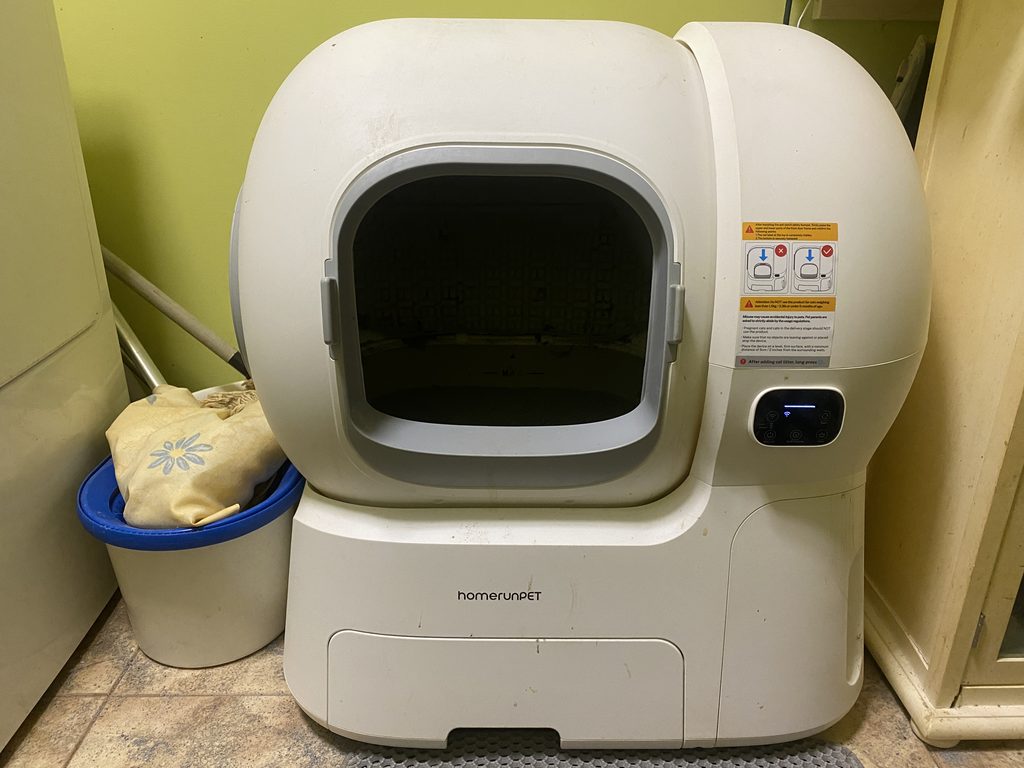
An automatic litter box can have the strongest outer shell in the world, but that won’t matter much if the cleaning mechanism stops working.
The motor and moving components do most of the actual work, so they’re particularly important when evaluating long-term reliability.
Think about how often an automatic litter box cycles. In a single-cat household, it might run a few times a day. With several cats, that number can climb considerably.
Over eight months, that adds up to hundreds (and potentially thousands) of cleaning cycles. A reliable cleaning mechanism should operate consistently without developing unusual noises, jerky movements or frequent interruptions unrelated to normal safety functions.
That last part is worth emphasizing. A litter box stopping because a cat approaches is a safety feature, not a reliability problem.
And believe me, my cats give the CS106 plenty of opportunities to demonstrate that particular feature. They seem to think the cleaning cycle is something they should supervise personally.
What I haven’t experienced is the machine stopping for no apparent reason or refusing to complete a normal cycle because of an unexplained error.
The CS106’s cleaning mechanism has continued working consistently throughout the eight months I’ve owned it. That doesn’t tell me how the motor will perform several years from now, but it’s certainly encouraging.
3. Consider How Well the Sensors Hold Up Over Time
We talked quite a bit about sensors in our article on automatic litter box safety, but they’re important for durability and reliability, too.
Automatic litter boxes rely on sensors for several functions, including detecting cats, monitoring litter levels and determining when it’s safe to begin cleaning. Those sensors need to work reliably over time.
Now, sensors occasionally need maintenance. Litter dust, debris and placement issues can interfere with certain types of sensors, depending on the machine. That’s not necessarily a design flaw. It’s part of owning equipment that operates in an environment full of fine particles.
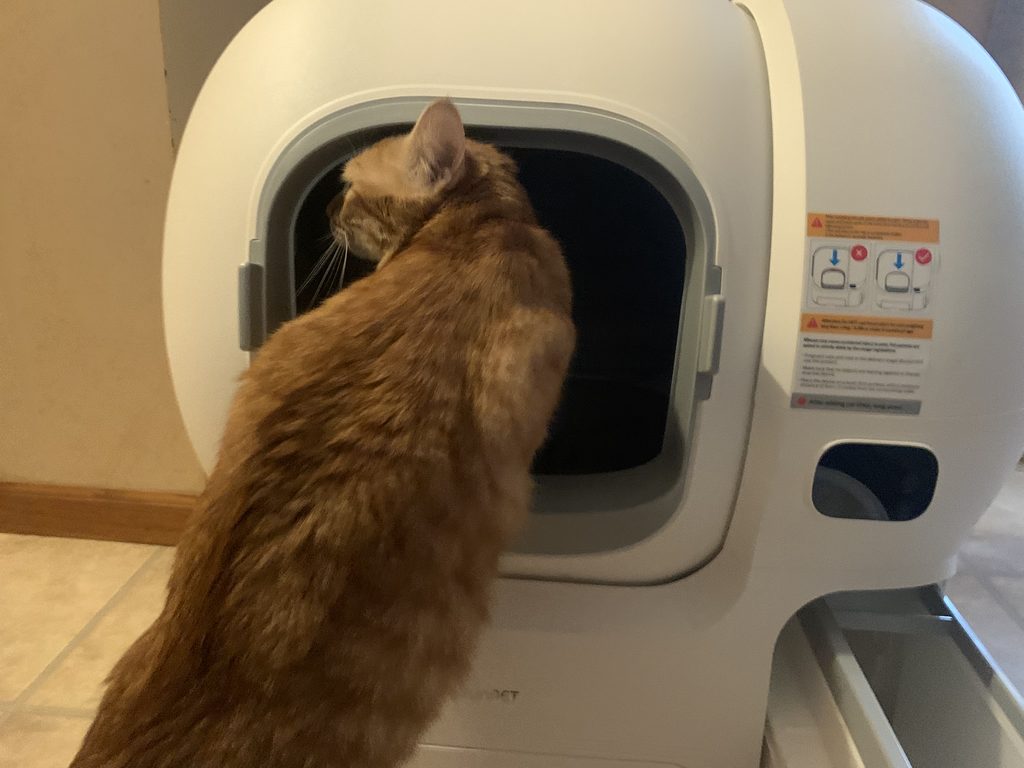
Still, there’s a difference between occasionally cleaning a sensor as part of normal maintenance and repeatedly troubleshooting unexpected sensor errors. The CS106 uses radar and weight sensors for cat detection. It also has a sensor that helps manage its automatic litter-refilling system.
In eight months, I haven’t experienced any unexplained sensor problems with mine. I haven’t needed to troubleshoot a mysterious detection error or figure out why the machine suddenly stopped recognizing something it previously recognized without difficulty. I actually haven’t even had to clean the sensors yet!
And considering how often my cats interrupt its cleaning cycles, those sensors certainly aren’t sitting around doing nothing.
Why sensor reliability matters beyond convenience
Reliable sensors are particularly important because some of them are directly involved in safety. You want a machine that consistently recognizes when a cat approaches or enters during a cleaning cycle.
That’s also why regular cleaning and following the manufacturer’s placement instructions matter, even if your automatic litter box has never given you a problem.
For example, HomerunPet recommends placing the CS106 on a hard, level surface rather than carpeting so its weight sensors can operate correctly.
Good maintenance and proper setup help give the machine the best chance of performing reliably.
4. Don’t Overlook App Reliability
This is probably the most underrated part of evaluating a smart litter box. We tend to think of durability as something physical. But when you’re buying a connected device, the software is part of what you’re paying for.
And an app that constantly disconnects, loses its connection to the device or requires repeated setup can make an otherwise perfectly functional litter box frustrating to use.
I’ve tested quite a few smart litter boxes over the years, and I’ve learned that occasional connectivity hiccups are simply part of dealing with connected technology.
Sometimes the issue is the Wi-Fi network. Sometimes it’s an app update, a router setting or something else entirely. A connection problem doesn’t automatically mean there’s something wrong with the litter box itself.
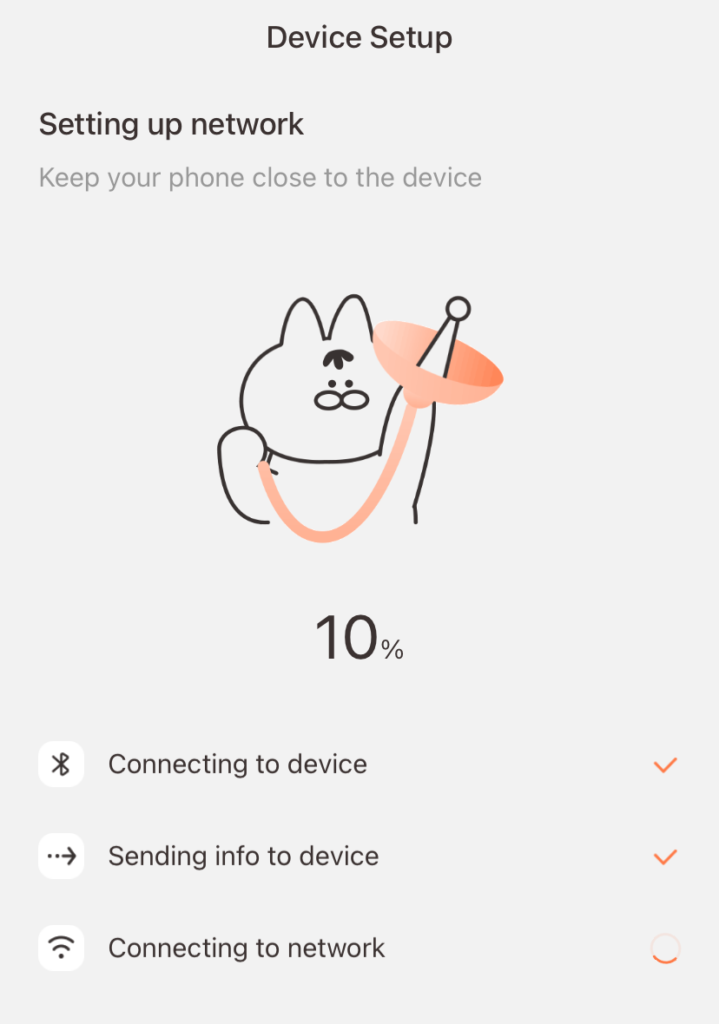
Still, consistent connectivity is something I absolutely appreciate when I find it. And this is one area where my HomerunPet CS106 has particularly impressed me. In eight months, I’ve only had to log back into the app once (after a relatively recent update).
Aside from that, I haven’t had to reconnect it, reset its connection or go through the setup process again because it suddenly stopped communicating with my phone. It has simply remained connected.
That’s especially nice because I use several connected pet products in my home, and keeping track of which device needs attention can occasionally feel like a part-time job. The HomerunPet app hasn’t added anything to that workload.
Look for functionality beyond the app, too
Another feature worth considering is whether an automatic litter box can still perform its basic functions without an active internet connection.
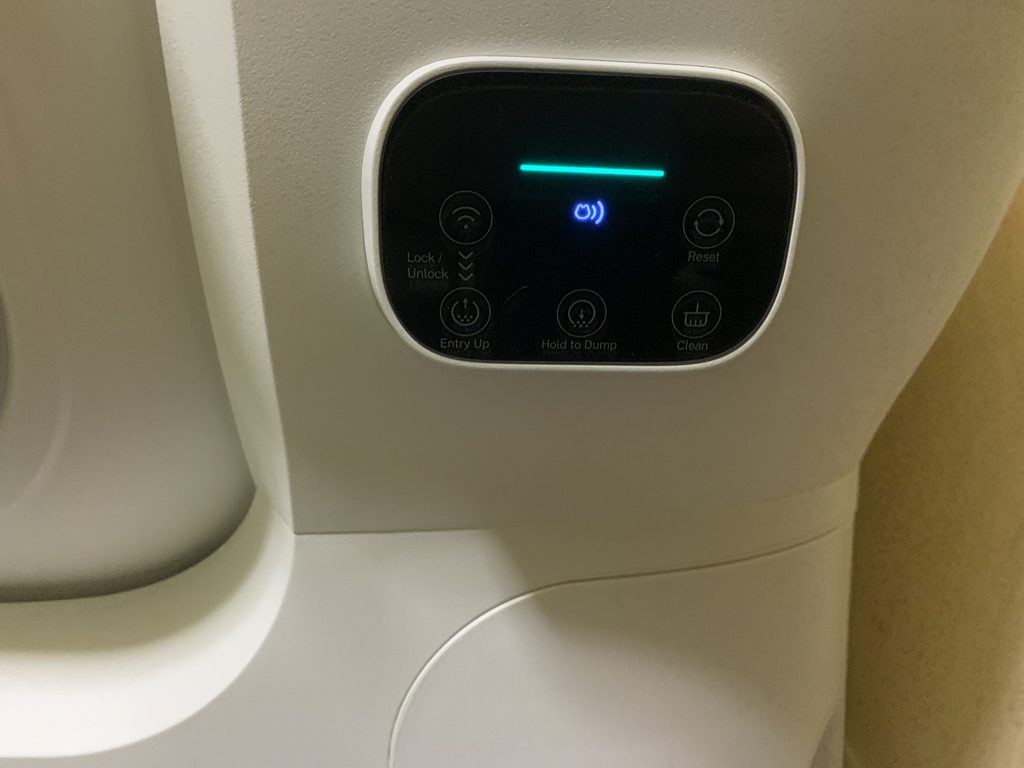
The CS106 doesn’t require Wi-Fi or an app to operate. You can control it directly through the touch panel on the machine. The app adds remote controls and monitoring features, but it isn’t required for basic operation.
I like that approach. Even if your internet goes down, you haven’t suddenly lost the ability to operate your litter box.
Of course, an app staying connected for eight months doesn’t guarantee it will never disconnect in the future. But it’s a meaningful part of my experience with the CS106 so far.
5. Look for a Design That’s Easy to Clean and Maintain
Here’s something that doesn’t always get enough attention when discussing durability.
A product that’s difficult to maintain may be harder to keep in good working condition.
Automatic litter boxes operate in a pretty challenging environment. There’s litter dust, moisture, waste and the occasional cat who apparently believes digging to the center of the Earth is a reasonable bathroom activity.
All of that makes cleaning and maintenance important. Before buying an automatic litter box, consider how easy it is to access the components that need regular attention.
Can you remove the drum or interior components for deep cleaning? Are there areas where waste or litter could accumulate? Can you reach the places that need cleaning without taking apart half the machine?
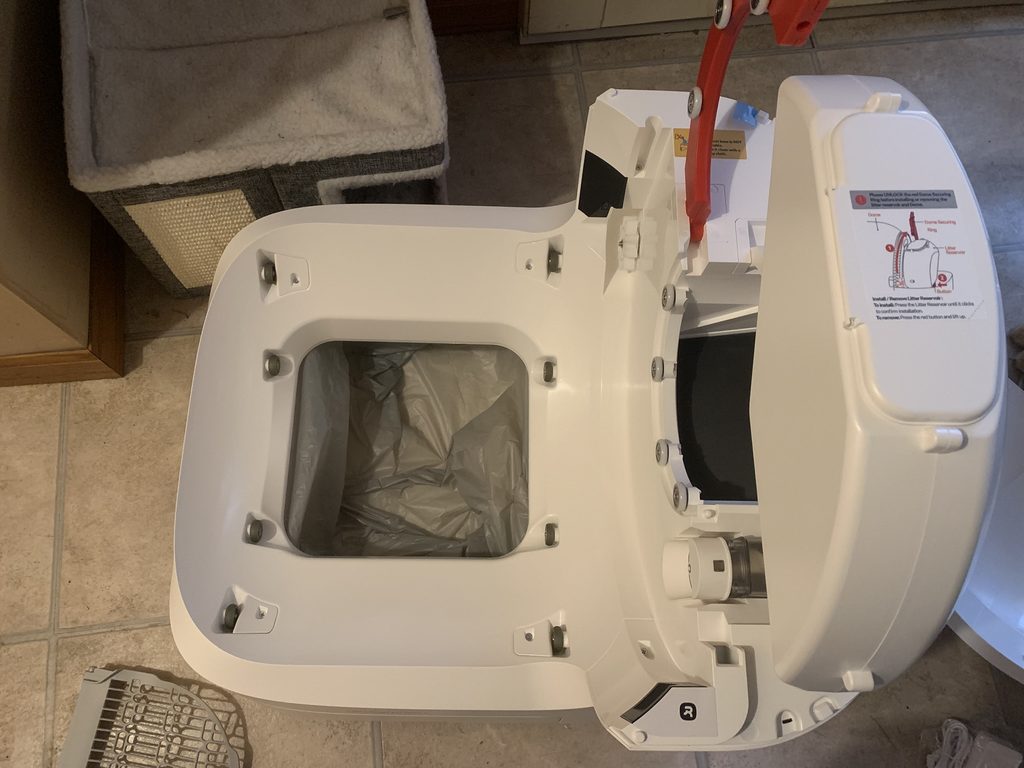
The CS106 has a removable dome designed for easier deep cleaning. HomerunPet also includes a litter-dumping function that helps empty used litter before a thorough cleaning.
Those are useful features because they make routine maintenance more manageable.
And while easy cleaning doesn’t guarantee a longer lifespan, it certainly makes it easier to care for the machine properly.
Don’t confuse maintenance with poor durability
I also think it’s important to make this distinction. Every automatic litter box requires maintenance. You’ll still need to empty waste, replenish litter (although thanks to the auto-refill feature of the CS106, you don’t even have to do that as often), clean components and occasionally check for debris.
Some machines may also require periodic sensor cleaning or other manufacturer-recommended maintenance.
None of that automatically means a product is poorly designed or unreliable. What I’m looking for is a machine that performs consistently between normal maintenance sessions, without constantly needing unexpected troubleshooting. So far, that’s been my experience with the CS106.
6. Consider How the Litter Box Handles Multiple Cats
If you have several cats, durability becomes even more important. A litter box that works beautifully in a single-cat household might experience significantly more wear when several cats use it throughout the day.
More cats generally mean more cleaning cycles, more waste and more opportunities for litter to get tracked into places it doesn’t belong. There’s also the simple fact that cats have different bathroom habits.
Some are tidy (my Zoe). Others appear to be renovating the litter box from the inside (Nori and Luke). Some fall somewhere in the middle depending on their mood (the rest of my crew).
The CS106 is particularly well suited to larger cats and multi-cat households because of its spacious interior and generous capacity. It has a 106-liter dome, a 12-liter waste bin and a 4.5-liter automatic litter-refill reservoir.
Those features are primarily about convenience and capacity rather than durability, but they’re still worth considering.
A larger waste bin means you may not need to empty it as frequently. Automatic refilling reduces how often you need to manually replenish the litter.
And the spacious interior gives cats plenty of room to move around. None of those features proves that the machine will last longer, but they can make everyday ownership easier, particularly when multiple cats are involved.
My CS106 has handled regular use in my multi-cat household for eight months without any mechanical or operational problems. Given how much activity there is around the litter boxes in my house, I’m pretty happy with that.
7. Check the Warranty, Replacement Parts and Customer Support
This is something I’d recommend checking before buying any expensive automatic litter box. Even well-made products can eventually need repairs. Motors wear out. Electronics can fail. Components can break.
That’s not necessarily a reflection of poor quality. It’s simply a reality of owning machines with moving parts.
What matters is what happens when something does go wrong.
Before purchasing, find out:
- How long is the manufacturer’s warranty?
- Which components does the warranty cover?
- Are replacement parts available?
- Can common repairs be handled at home?
- How do you contact customer support?
- Is there a reasonable return or trial period?
I would also look for reviews that discuss customer service experiences rather than focusing exclusively on how well the product worked right out of the box.
A company that provides replacement parts and responsive support can make a big difference in the practical lifespan of a product.
HomerunPet currently advertises a 90-day home trial for the CS106 and a 12-month warranty. It’s worth checking the current warranty and support terms before purchasing, since those policies can change.
8. Pay More Attention to Long-Term Reviews Than First Impressions
I love testing new pet technology. But there’s a big difference between reviewing something after two weeks and evaluating it after several months.
During the first few weeks, you’re mostly learning how a product works. You’re figuring out the settings, getting your cats accustomed to it and deciding whether the features are useful.
It’s only after you’ve lived with it for a while that you start noticing things like reliability, wear and how much maintenance it actually requires.
That’s why I always recommend looking for reviews from people who have owned an automatic litter box for at least several months.
And ideally, look for updates from people who have used the same machine for a year or longer.
A few questions I’d want answered include:
- Does the cleaning mechanism still work consistently?
- Have any parts cracked, loosened or worn out?
- Has the owner experienced recurring error codes?
- Does the app still connect reliably?
- Has the machine needed repairs or replacement components?
- Would the owner buy the same model again?
One important thing to remember is that a single problem doesn’t necessarily tell you much about a product’s overall durability.
Sometimes a component fails prematurely. Sometimes a problem comes down to setup, maintenance or an isolated defect.
I’d look for patterns across multiple long-term reviews rather than making a decision based on one glowing review or one frustrating experience.
That applies to the CS106 just as much as any other automatic litter box.
My Experience With the HomerunPet CS106 After Eight Months
I want to spend a little more time on my actual experience because I think it’s useful to distinguish between what a manufacturer says about a product and what happens when you live with it.
I’ve had my HomerunPet CS106 for eight months now. During that time, it has been used regularly in a household with multiple cats, including some very curious younger cats who have absolutely no intention of leaving an automatic litter box alone while it’s cleaning.
And in those eight months, I’ve had zero durability or reliability problems.
Here’s what that looks like in practical terms:
- No physical damage: Nothing has cracked, broken, loosened or fallen off.
- No mechanical problems: The cleaning mechanism continues operating as expected.
- No unexplained error codes: I haven’t had to troubleshoot random operational errors.
- No unexpected sensor issues: The sensors have continued functioning without requiring troubleshooting.
- No app disconnections: The CS106 has remained connected to its app since I originally set it up.
- No unexpected troubleshooting: I haven’t had to reset the machine or figure out why something suddenly stopped working.
When you own several pieces of smart pet technology, you get used to occasionally having to troubleshoot something.
Sometimes it’s a minor issue that takes 30 seconds to fix. Other times, you spend an hour figuring out why a perfectly functional device suddenly decided it doesn’t want to communicate with your phone anymore.
It’s not necessarily a sign of a bad product. Even excellent technology occasionally has issues.
But there’s something particularly satisfying about a machine that simply does its job without demanding attention. That’s been my experience with the CS106.
Does eight months prove it’s exceptionally durable?
No, and I wouldn’t pretend otherwise. Eight months is a useful observation period, but it’s still relatively early in the life of an appliance that should ideally provide years of service.
I can’t tell you how the motor will perform after five years or whether a particular component will eventually need replacing.
What I can tell you is that after eight months of regular use, my CS106 is functioning just as well as it did when I first set it up. And that’s a pretty good start.
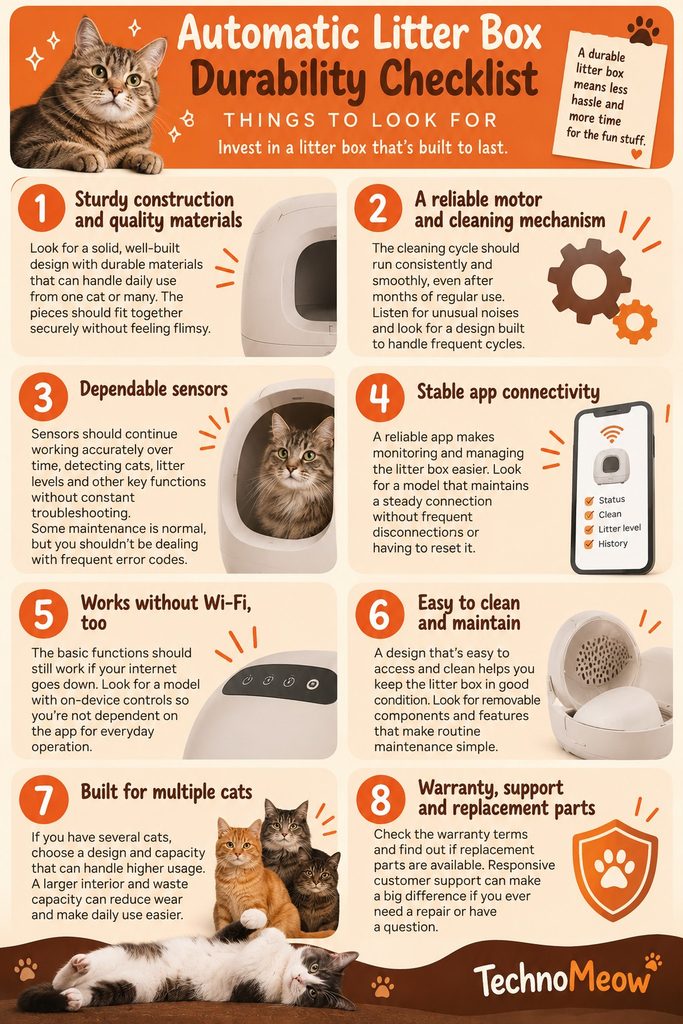
Automatic Litter Box Durability Checklist
Before investing in an automatic litter box, here’s what I’d look for:
- Sturdy construction: Solid materials and components that fit together securely.
- A reliable cleaning mechanism: Smooth, consistent operation without frequent unexplained interruptions.
- Dependable sensors: Accurate detection without recurring errors or excessive troubleshooting.
- Stable app connectivity: Reliable communication between the litter box and your phone.
- Offline functionality: Basic operation that doesn’t depend entirely on Wi-Fi.
- Easy maintenance: Accessible components that can be cleaned without unnecessary hassle.
- Multi-cat suitability: A design and capacity appropriate for your household’s usage.
- Warranty and repair support: Clear warranty terms, responsive support and replacement parts when available.
- Positive long-term reviews: Real-world experiences from owners who have used the machine for months or years.
And remember, no automatic litter box is completely maintenance-free.
The goal isn’t to find a machine you’ll never have to touch again. It’s to find one that handles its intended job consistently without creating a bunch of extra work.
The Bottom Line: Durability Is About More Than How Long the Plastic Lasts
When you’re spending several hundred dollars on an automatic litter box, you want something that will hold up.
But durability isn’t just about whether the housing stays intact. It’s also about whether the motor continues working smoothly, the sensors remain dependable and the software does what it’s supposed to do.
A durable automatic litter box should also be a reliable one.
That’s what I’ve appreciated most about my HomerunPet CS106 over the past eight months. It hasn’t required repairs, replacement parts, repeated app connections or unexpected troubleshooting. It just works.
Will it still be working this well five years from now? I certainly hope so, but I’ll have to get back to you on that. For now, eight months of trouble-free operation in a multi-cat household is a solid start.
And considering how many gadgets I have in my house that occasionally need some sort of attention, I appreciate having one that doesn’t.
Especially when that gadget’s entire purpose is to make cleaning up after six cats a little less work.
The HomerunPET CS106 is one of the largest automatic litter boxes I’ve tested, with a roomy 106L dome and oversized 12L waste bin. Designed for big cats and real multi-cat homes, it also features an auto-refill system, ultra-quiet operation, and strong safety sensors. If you want a more hands-off litter setup, this one delivers.
BEST PRICE GUARANTEE
SAVE $60 WITH COUPON CODE PAWZ



Leave a Comment