

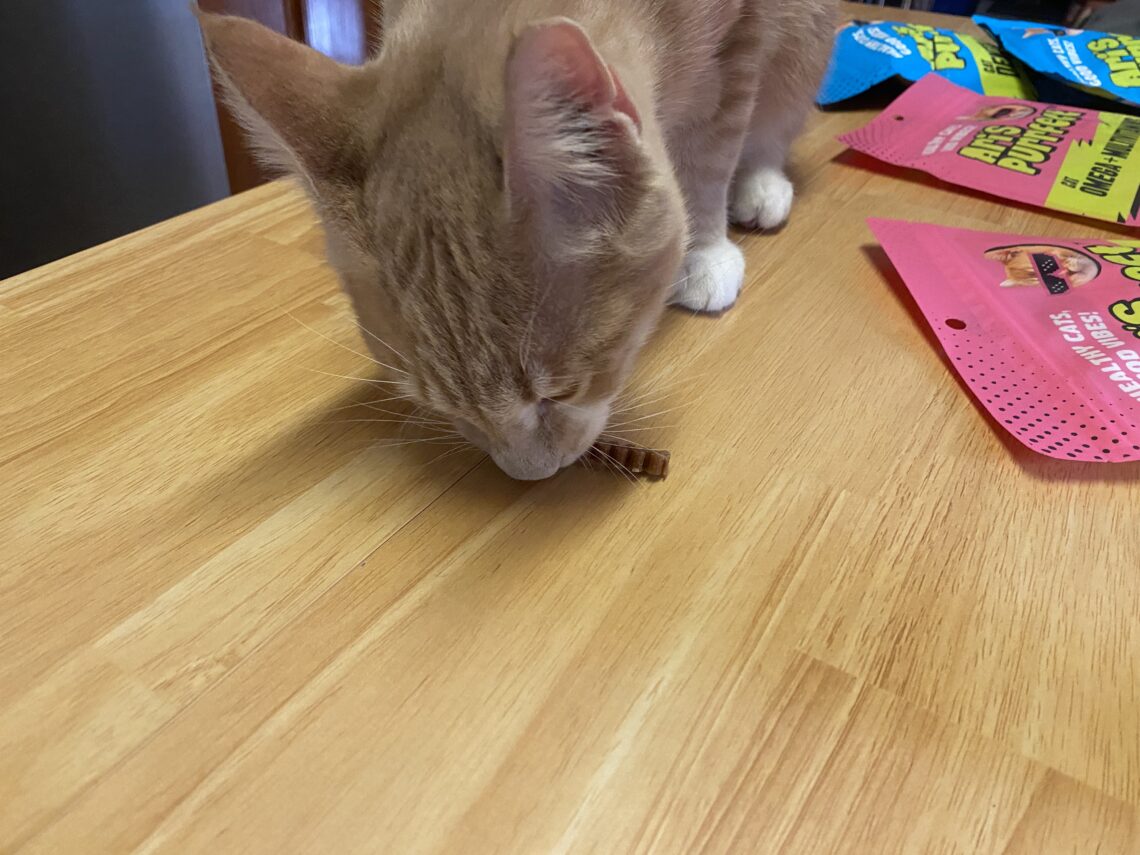
If your kitten has suddenly decided that everything in your house is a chew toy, there’s a good chance teething is to blame. And when I say everything, I mean everything. Cardboard boxes, furniture, random objects that have absolutely no business going into a cat’s mouth. Apparently, nothing is off-limits when those adult teeth start coming in.
I’m currently going through this with two kittens, Nori and Touka, and it’s fascinating how differently they’re handling it. Nori is determined to personally test the chewability of every object in the house. Touka, on the other hand, is considerably more dignified about the whole thing. She’s teething too, but she doesn’t feel the need to involve the furniture.
One thing Nori particularly enjoys is Ari’s Purrfect Cat Dental Bites, which we’ve been incorporating into his dental-care routine. He loves them, and they’ve been an easy way to introduce a little oral-care habit while he’s still young. They’re not a replacement for proper teething toys or brushing, of course, but they’re something he actually looks forward to (which is more than I can say for most attempts at feline dental care).
If you’re dealing with a teething kitten of your own, here’s what to expect, what’s normal, and how to help them through it without sacrificing half your belongings.
Support your cat's dental health with these tasty, feline-sized chews. Formulated with sodium hexametaphosphate (SHMP), they help prevent plaque from hardening into tartar. An easy addition to your cat's daily dental care routine).
Best Price on the Web
Save 25% with Coupon Code PURRFECT25

When Do Kittens Start Teething?
Kittens actually go through two stages of teething, much like human babies. The first happens when their baby teeth start coming in, usually around 2 to 3 weeks of age. By approximately 6 to 8 weeks, most kittens have their complete set of 26 baby teeth.
The second stage is the one most kitten owners notice. Around 3 to 4 months old, those little baby teeth start falling out to make room for permanent adult teeth.
Here’s a general timeline:
| Age | What’s happening |
|---|---|
| 2–3 weeks | Baby teeth begin erupting |
| 6–8 weeks | Most kittens have all 26 baby teeth |
| 3–4 months | Baby teeth begin falling out and adult teeth start emerging |
| 4–6 months | Most permanent teeth continue coming in |
| 6–7 months | Most kittens have their full set of 30 adult teeth |
These ages are approximate. Some kittens start a little earlier or finish a little late. At Touka’s and Nori’s pre-spay/neuter appointment, the vet pointed out that Touka was ahead of Nori by two teeth, even though they were both born on the same day to the same litter.
And don’t be surprised if you never actually find a lost baby tooth. Kittens usually swallow them while eating or grooming, and that’s generally harmless.
Occasionally, though, you’ll discover a tiny tooth on the floor or stuck in a toy. Consider it a souvenir of a developmental stage that your kitten probably won’t remember but your furniture certainly will.
7 Signs Your Kitten Is Teething
Not every kitten experiences teething the same way. Some barely seem to notice, while others develop a sudden fascination with chewing anything they can get their paws on.
Here are some of the most common signs.
1. Chewing on Everything
This is probably the most obvious sign, especially if your kitten suddenly starts gnawing on things they previously ignored.
You might notice them chewing on cardboard, blankets, furniture edges, toys, or even your fingers.
Chewing can provide some relief from the pressure and irritation associated with erupting teeth. It also gives kittens an opportunity to explore different textures, something they’re naturally inclined to do anyway.
Nori is a perfect example. He’s always been a curious kitten, but teething seems to have turned that curiosity into a full-time chewing operation.
Just remember that not everything a kitten wants to chew is safe. Electrical cords, rubber bands, hair ties, and small plastic objects are particularly concerning because they can cause injuries or intestinal blockages.
2. Increased Biting During Play
Kittens naturally explore and play with their mouths, so a little biting isn’t unusual. However, teething can make them more interested in biting and chewing than usual.
If your kitten suddenly starts chomping down harder during play, sore gums may be contributing to the behavior.
That doesn’t mean you should let them chew on your hands. Redirect them toward an appropriate toy instead. It’s much easier to teach good habits now than convince a full-grown cat that your fingers are no longer acceptable chew toys.
3. Red or Slightly Swollen Gums
As permanent teeth push through, you may notice mild redness or swelling around the gums (you may also not notice this at all. I never did). Some irritation is normal during teething, but it should be relatively mild.
Severe swelling, persistent bleeding, pus, or an obviously painful mouth isn’t something to dismiss as ordinary teething. Those symptoms deserve a veterinary examination.
4. Drooling More Than Usual
Some kittens drool a little more while they’re teething, particularly when chewing or playing. This was Touka’s most obvious teething sign.
However, excessive or persistent drooling can indicate dental problems, mouth injuries, nausea, or other medical conditions. If your kitten is soaking their chin, pawing at their mouth, or refusing food, contact your veterinarian.
5. Changes in Eating Habits
Imagine trying to crunch hard food while your gums are sore. It’s not particularly appealing. Some teething kittens temporarily become less enthusiastic about dry food or prefer softer textures.
You might notice your kitten eating more slowly, dropping pieces of food, or choosing wet food over kibble. Nori never really liked wet food until he started teething.
A slight preference change can happen, but a kitten who stops eating altogether needs prompt veterinary attention. Young kittens shouldn’t go long without food.
6. Mild Bad Breath
Teething can occasionally cause a temporary change in breath odor as baby teeth loosen and gums become irritated.
However, there’s a difference between slightly unpleasant kitten breath and a genuinely foul smell.
Persistent bad breath, especially when accompanied by inflamed gums or difficulty eating, may indicate a dental problem rather than normal teething.
7. Finding Tiny Teeth Around the House (MAYBE)
This is one of the more interesting signs, assuming you happen to spot one. Kitten baby teeth are incredibly small, and many fall out without anyone noticing. In all my years of having multiple cats, I’ve never once found a baby tooth.
Still, you may occasionally find one near a favorite sleeping spot, inside a toy, or on the floor. A little blood on a toy can also happen when a baby tooth falls out, but bleeding should be minimal and stop quickly.
How to Help a Teething Kitten
You can’t stop the teething process, and you wouldn’t want to. Those permanent teeth are an important part of your kitten’s development.
What you can do is make the process more comfortable while protecting your belongings from becoming casualties.
1. Offer Safe, Kitten-Appropriate Chew Toys
The best teething toys are soft enough to be gentle on sensitive gums but sturdy enough to withstand chewing.
Look for toys specifically designed for kittens, preferably made from flexible, non-toxic materials.
Soft fabric toys and appropriately sized, durable rubber toys may be good options, depending on your kitten’s chewing habits.
Avoid anything extremely hard, since hard objects can damage developing teeth. Make sure you inspect toys regularly. If your kitten starts tearing pieces off, remove the toy before those pieces become a swallowing hazard.
2. Try a Cool, Damp Washcloth
A cool washcloth can provide temporary relief for sore gums. Wet a clean washcloth with cool water, wring it out, and let your kitten investigate it under supervision.
Some kittens enjoy gently chewing on the cool fabric. Others will look at you as though you’ve completely lost your mind. Both reactions are normal.
Avoid freezing the washcloth solid. Extremely cold, hard objects can be uncomfortable and potentially damaging to sensitive teeth and gums.
Also, remove the washcloth if your kitten starts pulling off threads or trying to swallow pieces.
3. Make Mealtimes More Comfortable
If your kitten seems reluctant to crunch dry food, try offering wet kitten food or softening their usual kibble with a little warm water.
You don’t necessarily need to change their entire diet. Sometimes a temporary adjustment in texture is enough.
The important thing is making sure your kitten continues eating a complete and balanced diet appropriate for growth.
If your kitten seems hungry but struggles to eat, cries while chewing, or consistently drops food, have your veterinarian check their mouth.
4. Introduce Good Dental Habits Early
Teething is also a good time to begin introducing your kitten to dental care, although you’ll want to be gentle while their gums are sensitive.
Start by getting them comfortable with having their face and mouth touched.
You can gradually introduce a cat-specific toothbrush and veterinary-approved cat toothpaste once they’re comfortable. During periods of obvious gum soreness, keep sessions brief and avoid forcing brushing.
Never use human toothpaste, which may contain ingredients that are unsafe for cats.
The goal isn’t to achieve perfect brushing immediately. It’s to help your kitten accept the routine so dental care becomes easier as they grow.
And believe me, teaching a kitten to tolerate a toothbrush is considerably easier than introducing the concept to an adult cat who has already decided that dental hygiene is beneath them.
5. Consider Dental Treats as Part of Their Oral-Care Routine
This is where Ari’s Purrfect Cat Dental Bites have fit into our routine with Nori. He genuinely enjoys them, which makes them an easy addition to his day. And since he’s currently so interested in chewing, it’s nice having a treat he actually wants rather than trying to convince him to cooperate with something unfamiliar.
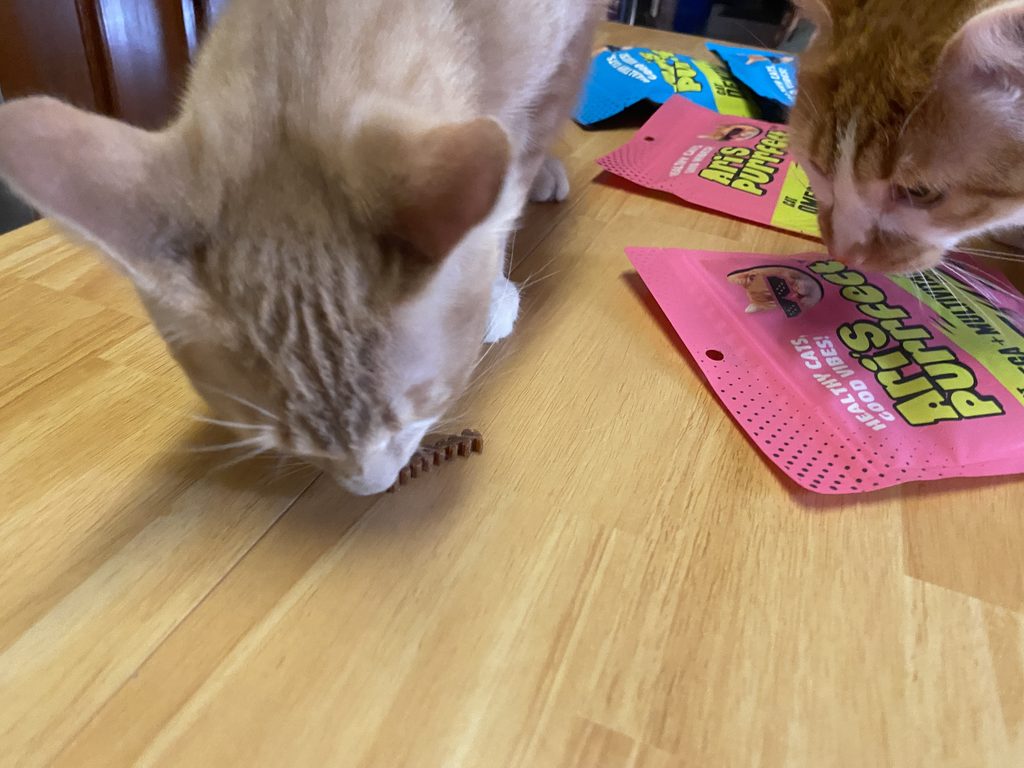
One thing that I do want to mention, though, is that dental chews aren’t necessarily teething aids.
Dental treats are designed to support oral hygiene, depending on their ingredients and design. Teething toys, on the other hand, are designed to give kittens a safe outlet for chewing and potentially help with gum discomfort.
They’re two different purposes, even if your kitten happens to enjoy both. Before giving dental treats to a teething kitten, check the manufacturer’s age recommendations, feeding directions, and whether the texture is appropriate for your kitten’s developing teeth. If you’re unsure, ask your veterinarian.
6. Kitten-Proof the Things They’re Most Likely to Chew
This is one of those situations where prevention is considerably easier than trying to supervise every second of your kitten’s existence.
Pay particular attention to electrical cords, charging cables, houseplants, string, ribbon, rubber bands, and small plastic items.
Cord protectors can be helpful if your kitten has developed an interest in electronics. (I bought this cable management kit for like $15, totally worth it).
Make sure any plants within reach are non-toxic to cats. Lilies, in particular, are extremely dangerous and should never be accessible to cats.
For kittens who love chewing cardboard, supervise them and remove pieces they might swallow.
You don’t need to turn your house into an empty room. Just assume that anything left within reach may eventually be subjected to a very thorough dental inspection.
This cable management kit includes cord protectors, cable clips, holders, and ties to help keep cords and other wires organized and out of your cat's reach. The adhesive clips attach to walls, baseboards, and furniture without drilling, making it easier to tuck away tempting cords and reduce chewing and tangling hazards.

7. Redirect Chewing Without Punishing Your Kitten
If your kitten starts chewing something inappropriate, calmly redirect them toward a safe alternative.
You can move the object out of reach or offer an appropriate toy instead. Avoid yelling, spraying water, or physically punishing your kitten. These methods don’t teach them what they should chew and may simply make them afraid of you.
Consistency matters more than anything. And if you have a particularly determined kitten like Nori, you’ll probably find yourself repeating the process approximately 400 times a day. Give or take.
What About Retained Baby Teeth?
Most kitten baby teeth fall out naturally as the permanent teeth emerge. Occasionally, though, a baby tooth doesn’t fall out when it should.
This is called a retained deciduous tooth, and it can create problems if the permanent tooth erupts alongside it.
You may notice what looks like two teeth occupying nearly the same spot, especially around the canine teeth.
Retained baby teeth can cause crowding, abnormal tooth positioning, and increased accumulation of plaque and debris.
If you notice an adult tooth coming in while the baby tooth is still firmly in place, schedule a veterinary examination.
Don’t try to pull the baby tooth yourself. Your veterinarian can determine whether it needs to be removed.
When Should You Worry About Kitten Teething?
Most kittens get through teething without serious problems. Some discomfort and extra chewing are expected, but significant pain or illness isn’t.
Contact your veterinarian if you notice any of the following:
- Your kitten refuses food or has significant difficulty eating.
- Their gums are severely swollen, bleeding persistently, or producing discharge.
- They have excessive drooling or a strong, unpleasant mouth odor.
- They repeatedly paw at their mouth or seem distressed when chewing.
- You notice a broken tooth or an adult tooth erupting beside a retained baby tooth.
- Their behavior changes dramatically, especially if they’re unusually lethargic.
Also, don’t assume that every instance of chewing or drooling is related to teething. Kittens are curious creatures, and sometimes their mouths get them into trouble for entirely unrelated reasons.
If you suspect your kitten swallowed a string, ribbon, or another foreign object, contact your veterinarian immediately. Never pull a string protruding from a kitten’s mouth or rear.
Kitten Teething FAQs
How long does kitten teething last?
The adult teething stage generally begins around 3 to 4 months of age and is usually complete by approximately 6 to 7 months. Individual kittens vary, and some may finish a little earlier or later.
Do kittens feel pain when teething?
Kittens can experience mild gum soreness and irritation as their adult teeth emerge. However, severe pain, refusal to eat, or significant mouth inflammation isn’t normal and should be evaluated by a veterinarian.
Is it normal for kittens to chew on cardboard?
Yes, many kittens enjoy chewing cardboard, especially while teething. However, swallowing cardboard can cause digestive problems, so supervise chewing and remove pieces your kitten tries to eat.
Can I give my kitten dental treats while they’re teething?
Possibly, depending on the treat’s age recommendations, ingredients, size, and texture. Some dental treats are intended for adult cats and may be too hard or otherwise unsuitable for young kittens. Check the product label and ask your veterinarian if you’re uncertain.
Should I brush my kitten’s teeth while they’re teething?
You can begin introducing gentle dental-care habits during teething, but avoid aggressive brushing or putting pressure on sore gums. Focus on helping your kitten become comfortable with handling and gradually build toward regular brushing with cat-safe toothpaste.
Do kittens swallow their baby teeth?
Yes, kittens commonly swallow their baby teeth when they fall out. This is generally harmless, which is why many owners never find any lost teeth around the house.
Why is my kitten biting me more than usual?
Teething may increase your kitten’s urge to chew, but biting is also a normal part of kitten play and exploration. Redirect biting toward appropriate toys rather than allowing your kitten to use your hands as chew toys.
Final Thoughts: Teething Is Temporary (Even If It Doesn’t Feel Like It)
The good news is that kitten teething doesn’t last forever. By around 6 to 7 months old, most kittens have their permanent teeth, and the extra chewing associated with teething should gradually settle down.
Of course, that doesn’t mean your kitten will suddenly stop chewing things altogether. Some cats just enjoy chewing, and kittenhood is also a time when they’re learning what they can get away with.
Watching Nori and Touka go through the same developmental stage in completely different ways has been pretty entertaining. Touka seems content to handle the whole process quietly, while Nori has apparently appointed himself the household’s official chew-toy inspector.
For now, we’re sticking with safe toys, keeping questionable objects out of reach, and continuing to introduce good dental habits. Nori’s Ari’s Purrfect Dental Bites are already a favorite part of his routine.
And hopefully, once those last adult teeth finish coming in, he’ll decide that the furniture has passed inspection.






Leave a Comment