

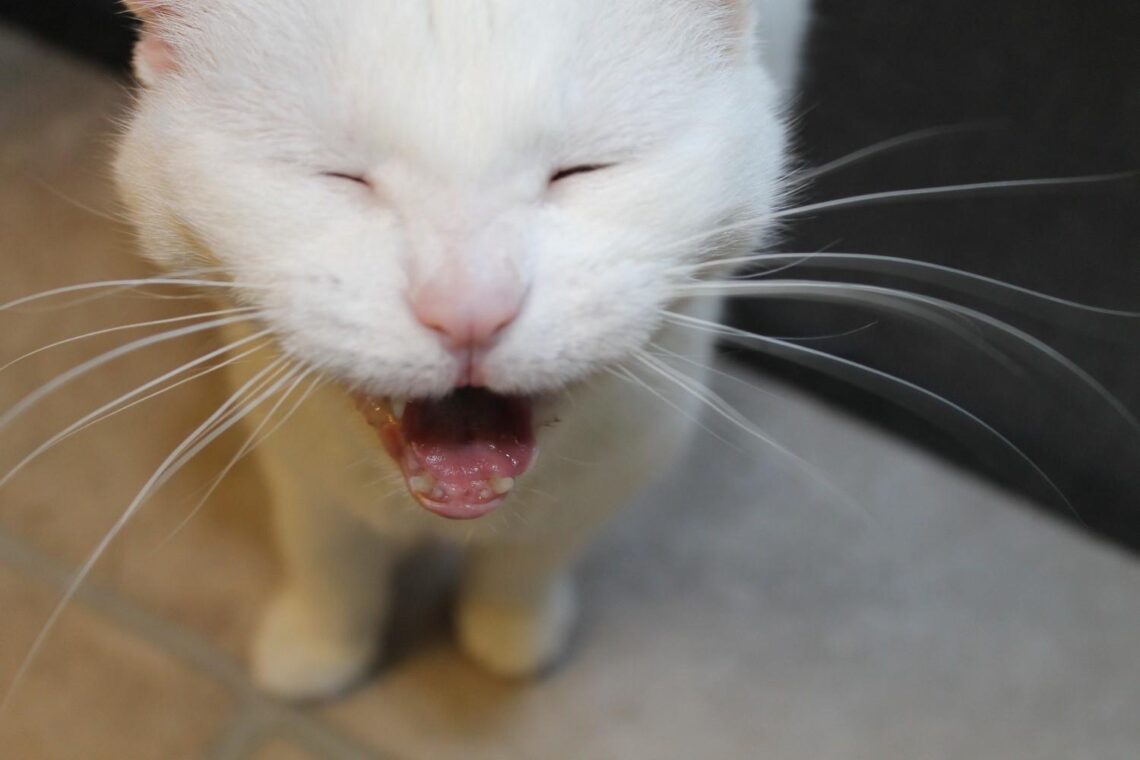
TL;DR – Why Cats Meow at Night
- Topic: Why cats vocalize at night and what their midnight meows might actually mean
- Most Common Causes: Hunger, boredom, attention-seeking, natural crepuscular activity, or changes in routine
- When to Pay Attention: Sudden increases in nighttime meowing can sometimes signal stress, aging-related confusion, or health issues
- What You’ll Learn: Practical ways to reduce late-night vocalizing through better routines, enrichment, and smart feeding schedules
💡 Why it’s worth your scroll: If your cat treats 3 a.m. like prime conversation time, this guide explains why it happens—and how to help everyone in the house sleep a little better.
Cats have impeccable timing. They will sleep like decorative throw pillows all afternoon, barely twitching, and then the moment you finally climb into bed… the opera begins.
If you’ve ever been jolted awake by a very loud, very opinionated “MROW?” at 3:17 a.m., you’re not alone. Nighttime meowing is one of the most common complaints cat owners have. And while it can feel like your cat is doing it purely to ruin your sleep schedule (jury’s still out on that), there are actually some pretty logical reasons behind the behavior.
Let’s break down what’s going on.
Why Do Cats Meow at Night?
First things first: cats don’t usually meow for no reason. Meowing is how cats ask for help or just how they communicate with humans in general. Adult cats rarely meow at other cats. They learned somewhere along the way that we respond to it, so they use it.
Nighttime just happens to be when some of those motivations kick into high gear.
Here are the most common ones.
1. Your Cat Is Naturally More Active at Night
Cats are crepuscular animals. That means they’re naturally most active at dawn and dusk.
In the wild, those are prime hunting hours. Small prey animals are moving around, the light levels are perfect, and the air is cooler. Your house cat may not be stalking mice in the woods, but that internal clock is still ticking.
So while you’re trying to sleep, your cat might be thinking:
“Great! It’s hunting time. Where did everyone go?”
If they’re bored or full of pent-up energy, they may start meowing simply because they’re awake and looking for something to do.
You’ll often see this paired with other classic midnight behaviors:
- Zoomies across the hallway
- Batting toys under furniture
- Dramatic parkour off the back of the couch
And occasionally, yelling into the void for emphasis.
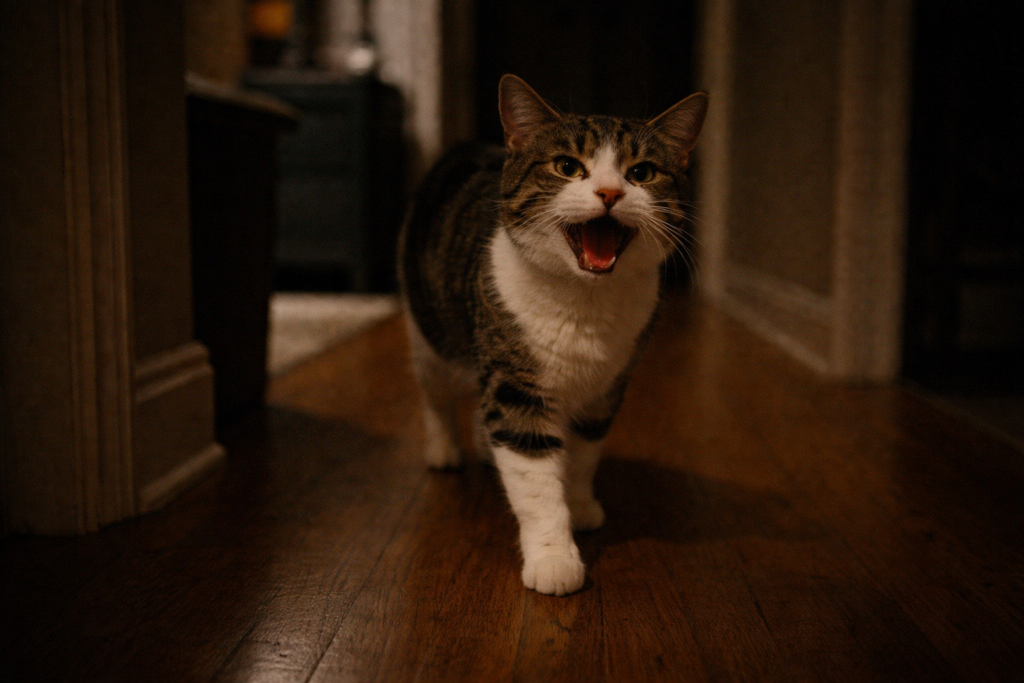
2. They’re Hungry (Or Think They Should Be)
Cats are excellent at remembering routines. If your cat usually eats breakfast at 6 a.m., they may start reminding you about that around… 4:30.
With sound. LOTS of sound.
Some cats also associate nighttime with food if they’ve been fed late in the evening before. Once that expectation is set, they may vocalize when they think it’s mealtime.
This is especially common in multi-cat households where food competition is a thing. (Your cats Zoe, Alex, Leia, Lily, and Luke probably all have opinions about dinner scheduling.)
3. Your Cat Wants Attention
Cats may pretend to be aloof, but many of them are extremely social with their humans.
At night, when the house is quiet, your cat might suddenly realize:
“Wait… where did my people go?”
If they’re used to interacting with you in the evening, they may wander around meowing while trying to locate you.
Sometimes they even sit outside the bedroom door delivering a full monologue about their feelings.
If you respond consistently (even by telling them to be quiet), they quickly learn that nighttime meowing gets results. And congratulations, you’ve just trained your cat to wake you up.
Cats are very good at training us.
4. They’re Bored
Indoor cats rely heavily on their environment for stimulation. If they didn’t get much playtime during the day, nighttime may be when they try to create their own entertainment.
And if there’s nothing interesting happening, they may resort to yelling.
Think of it as the feline version of scrolling social media at 2 a.m. because you can’t sleep.
5. Your Cat Is Getting Older
Senior cats sometimes develop nighttime vocalization for different reasons.
Aging cats can experience changes in their sleep cycles, similar to people. They may wake up disoriented or restless during the night and start meowing.
In some cases, it can also be related to cognitive dysfunction (often described as feline dementia). Cats with this condition may vocalize more, wander at night, or seem confused.
If a previously quiet older cat suddenly becomes very vocal at night, it’s worth mentioning to your veterinarian.
6. Hormones (If They Aren’t Spayed or Neutered)
Unspayed female cats in heat are famous for loud nighttime vocalizations.
And when I say loud, I mean opera-house-worthy.
Unneutered male cats may also meow more at night, especially if they can sense females nearby.
If your cat isn’t spayed or neutered, fixing them usually reduces this behavior dramatically.
Tech Solutions That Can Actually Help
If nighttime meowing is caused by boredom or early-morning hunger, a little tech can sometimes save your sanity.
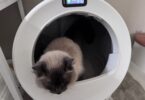
Smart automatic cat feeders, for example, can schedule small meals overnight or early in the morning. Instead of waking you up at 5 a.m., your cat learns that breakfast comes from the feeder.
Something like the HomerunPet Smart Feeder works particularly well for this. You can schedule precise meal times through an app, adjust portions, and create a consistent routine that doesn’t depend on you being awake.
Designed with pets' health in mind, the feeder features triple silicone sealing and auto-closure of the feeder outlet to make sure it is airtight, damp-proof and pest-proof internally for lasting freshness and nutrition. The anti-clog system eliminates the frustration of jammed food for pet owners to ensure that pets get fed as desired. Easily manage the meal time, number of meals and portion size with Homerunpet App to allow auto food dispensing even when you're not around.

Cats thrive on predictability. When food appears at the same time every day (without you being the delivery system), the early morning wake-up calls often fade.
Another surprisingly helpful gadget is a pet camera with treat tossing or interactive play features. Some cats vocalize at night simply because they’re bored and looking for activity. A quick remote play session or treat toss can redirect that energy without you having to get out of bed.
See, talk, and play with your cat even when you’re away! Take better care with Furbo Cat Nanny's Smart Alerts for the ultimate peace of mind. Furbo's AI Technology is always getting smarter by learning your cat's behavior to notify you of important events. Works with smart devices. Always stay one step ahead of important moments. Connect and get alerted by Furbo through a smart device of your choice.

Is technology a complete solution to cat behavior? Not always.
But in the right situation, it can definitely help smooth out those 3 a.m. negotiations.
How to Reduce Nighttime Meowing
If your cat has turned nighttime into a talking hour, these strategies usually help.
Increase Evening Playtime
A solid play session before bedtime can make a big difference. Wand toys, laser pointers, and chase games help burn off energy.
Think of it as simulating a hunt cycle:
- Hunt (play)
- Eat (small meal)
- Groom
- Sleep
When you follow that pattern, many cats naturally settle down afterward.
Feed a Small Bedtime Meal
A light meal before bed can keep your cat from waking up hungry in the middle of the night.
Cats with small, frequent meals often sleep more consistently.
Avoid Reinforcing the Behavior
This is the hard one.
If your cat meows and you immediately respond, they learn that meowing works.
Sometimes the best approach is to ignore the behavior entirely (assuming you know their needs are met). Eventually, the meowing becomes less rewarding.
Expect a brief extinction burst, though. Cats may get louder before they give up.
They are persistent little creatures.
Add More Daytime Enrichment
Cats that are mentally stimulated during the day are less likely to create midnight chaos.
Consider adding:
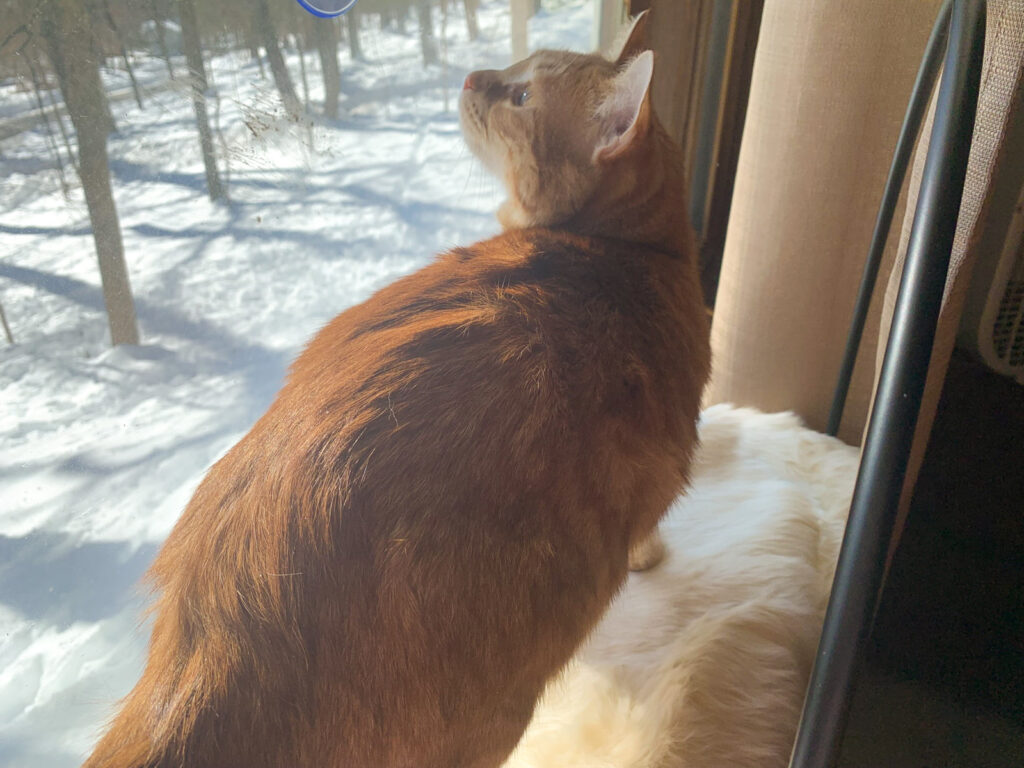
- Window perches (like the Tuft & Paw Cloud Nine) for bird watching
- Puzzle feeders
- Rotating toy collections
- Interactive play sessions
Even small changes can reduce nighttime boredom.
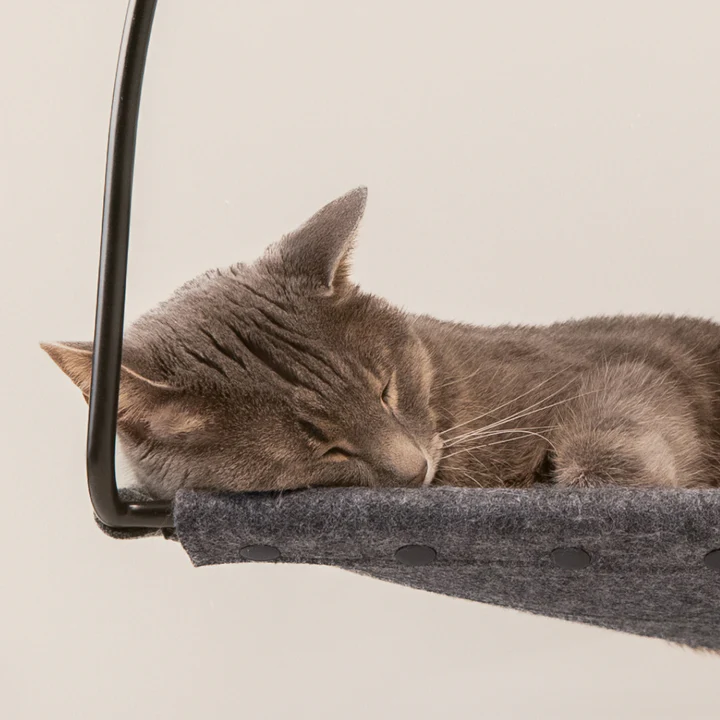
The Cloud Nine Window Hammock gives your cat front-row seating for bird-watching, sunbathing, and neighborhood surveillance. Its minimalist steel arch keeps things sleek, while the sturdy grey felt cradle supports everything from lazy naps to surprise zoomies. Heavy-duty suction cups secure it firmly to glass and hold up to 30 pounds, so your cat can lounge confidently (and you don’t have to worry about midnight crashes).
When Nighttime Meowing Is a Problem
Occasional nighttime chatter is normal.
But if your cat suddenly starts meowing constantly at night, especially if it’s paired with other symptoms like restlessness, changes in appetite, or unusual behavior, it’s a good idea to check with your vet.
Sometimes the cause is medical rather than behavioral.
The Bottom Line
Most of the time, nighttime meowing comes down to one simple fact: your cat is awake and has something to say.
Maybe they’re bored. Maybe they’re hungry. Maybe they’re wondering why their humans are sleeping during perfectly good hunting hours.
With the right mix of routine, enrichment, and sometimes a little smart pet tech, you can usually quiet the midnight monologues and get everyone back to sleep.
Well… mostly.
Cats still reserve the right to yell at invisible things occasionally. It’s part of the charm. (Or at least that’s what we tell ourselves at 3 a.m.)







Leave a Comment