

If you’ve ever cleaned up cat pee only for the smell to magically return days later… you’re not imagining it.
That sharp ammonia stink doesn’t just linger—it reactivates with humidity, heat, and time. And unless you’re using an enzyme cleaner for cat urine, you’re basically playing odor whack-a-mole.
The good news? There’s a real fix. And it’s easier than you think.
Let’s break down why cat pee is so stubborn—and why your litter box habits (plus the right cleaner) make all the difference.
TL;DR: Cat Pee Sucks. Enzyme Cleaners Don’t.
🐾 TL;DR — Why Enzymes Are the Only Real Cat Pee Solution
- ✔️ Regular cleaners just mask the smell—enzymes actually break it down at the source.
- 🧪 Uric acid crystals in cat urine are basically waterproof. Enzymes are the only thing that can dissolve them.
- 🌿 Kinderbean No-Stress Mess Eraser is our top pick: natural, pet-safe, and effective even on old stains.
- 🐾 If your cat avoids the box, it might be too dirty. Self-cleaning litter boxes keep things fresh and reduce accidents.
- 💡 Skip the vinegar. Scroll down for what actually works—and how to use it correctly.
Keep reading to learn why enzymes succeed where everything else fails—and how to get rid of cat pee odors for good.
Targets and destroys uric acid crystals at the molecular level.
Pet-safe formula, eco-friendly, and gentle on surfaces.
Reduces repeat accidents by fully eliminating odor triggers.
Why Cat Urine Is So Hard to Remove
Let’s be real: cat pee is next-level.
It doesn’t just smell bad—it chemically clings to surfaces and reactivates when the air gets moist again.
That’s because of something sneaky called uric acid crystals.
Here’s the problem:
- Uric acid doesn’t dissolve in water.
- Air fresheners, baking soda, even vinegar just cover the smell.
- When humidity kicks in? The smell comes back. Stronger.
And your cat’s nose is even more sensitive than yours. If you don’t clean the spot completely, they’ll think it’s okay to go there again. (Rude, but true.)
What to know: Unless you’re using an enzyme cleaner, you’re not cleaning cat pee. You’re just temporarily distracting it.
Why Enzyme Cleaners + The Right Tools Actually Work (And Everything Else Doesn’t)
You’ve probably tried it all—vinegar, baking soda, essential oils, that mystery bottle from under the sink.
Here’s the truth: none of that will fully eliminate cat urine smell. That’s because cat pee isn’t just a stinky liquid. It’s a chemical puzzle made of uric acid crystals, bacteria, and ammonia.
And unless you’re breaking that puzzle down at a molecular level, it’s going to come back. Stronger. Especially when it’s humid.
But What Is an Enzyme Cleaner, Really?
Enzyme cleaners use natural biological compounds—enzymes—to break down organic messes like urine, vomit, or feces at a molecular level.
Here’s how it works:
- Cat urine contains uric acid, proteins, and bacteria
- Enzymes in the cleaner target and digest these elements
- Once broken down, the mess is converted into water and gas, which evaporate
That’s why enzyme cleaners don’t just mask the smell like perfumes or disinfectant sprays do—they break down the actual chemical compounds causing it.
Instead of covering up the odor for a few hours (only for it to creep back later), enzyme cleaners eliminate the source—including the microscopic residues that your cat’s nose can still detect even when you can’t.
Once the enzymes finish their work, there’s truly nothing left behind—no smell, no scent markers, no reason for your cat to return to the scene.
Our Recommendation
After testing dozens of cleaners, Kinderbean stands out—not just because it’s effective, but because it’s smartly designed for real pet messes.
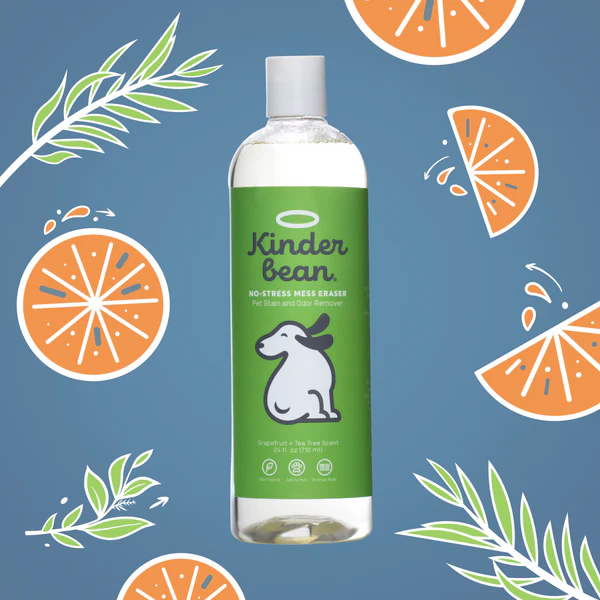
- Pet-safe formula with a light citrus scent from natural oils
- Two top options:
- Squeeze top for soaking carpets and upholstery (critical for enzyme action)
- Spray top for hard floors, baseboards, and walls
- Works on: tile, wood, artificial turf, dog beds, clothing, leashes, and more
- Effective on both fresh and old stains (yes, really)
- Non-foaming, so it’s safe for carpet and upholstery machines
💡 Pro Tip: For fabrics and rugs, let Kinderbean sit for 12–24 hours before blotting dry. The longer it rests, the more odor it erases.
Kinderbean No-Stress Mess Eraser is a safe, plant-based enzyme cleaner that eliminates tough pet messes—pee, poop, vomit, and more—on carpets, furniture, and hard floors. Each 24 oz bottle includes spray and pour tops. Non-toxic, residue-free, and grapefruit tea tree scented, it’s pet- and family-friendly, created by expert Kristen Levine.

Why Cats Pee Outside the Box (And Why Cleanliness Is Usually the Culprit)
When your cat stops using the litter box, it’s easy to assume the worst.
But in most cases, it’s not revenge. It’s not rebellion. It’s usually… the box.
Here’s what causes most “outside the box” accidents:
- The litter box is too dirty
- It smells bad—even if it looks clean
- The texture of the litter changed
- There’s not enough litter box space
- The cat had a negative experience in or near the box
- Medical issues (always rule this out with your vet first)
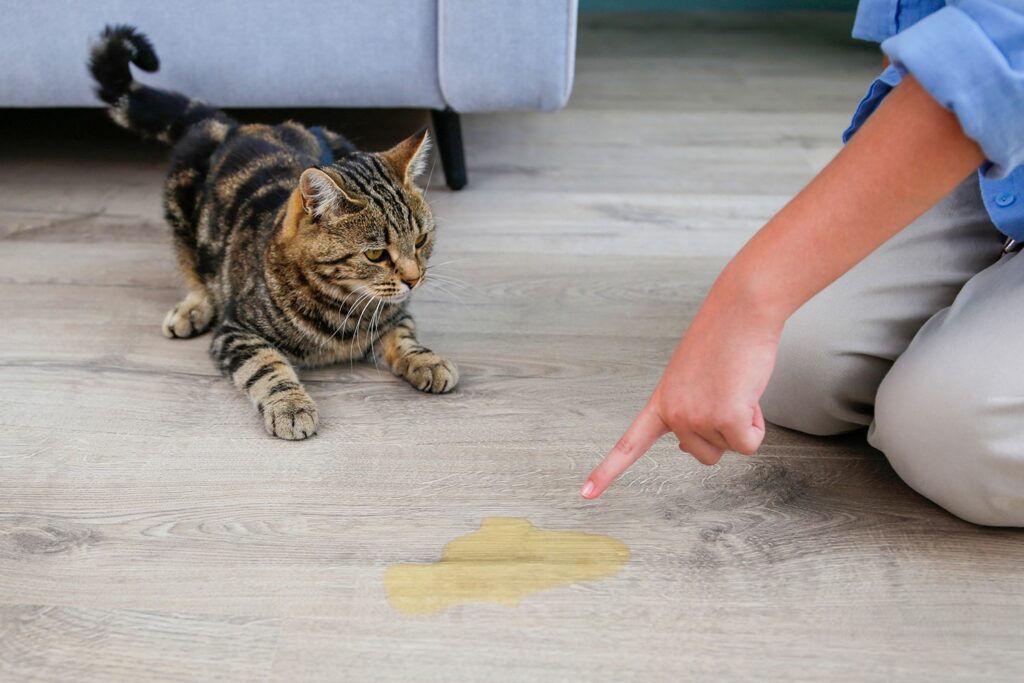
Cats are naturally clean animals. If the box is gross, they’ll find somewhere else to go.
That “somewhere else” is often your rug, couch, or pile of freshly folded laundry.
💡 Tip: If your cat is healthy but still peeing outside the box, a self-cleaning litter box can make a huge difference.
Self-cleaning litter boxes keep things consistently fresh, even when you’re busy or away. And that means fewer smells, fewer stress pee situations, and a happier cat-human home.
Related Post: 5 Best Self-Cleaning Litter Boxes for Cats
Why Enzyme Cleaners + Self-Cleaning Litter Boxes = The Dream Team
Let’s zoom out for a sec. Cleaning cat pee is only half the problem.
The other half? Making sure it doesn’t happen again.
That’s why pairing an enzyme cleaner like Kinderbean with a self-cleaning litter box is such a game-changer.
Here’s why this combo works so well:
- Enzyme cleaners erase scent memory. Cats can’t smell where they’ve peed = less chance of repeat accidents.
- Self-cleaning litter boxes keep the box appealing. That means your cat is way more likely to use it consistently.
- Both reduce your stress. No more coming home to mystery smells or finding “surprises” in weird places.
- Together, they tackle both the symptom and the cause.
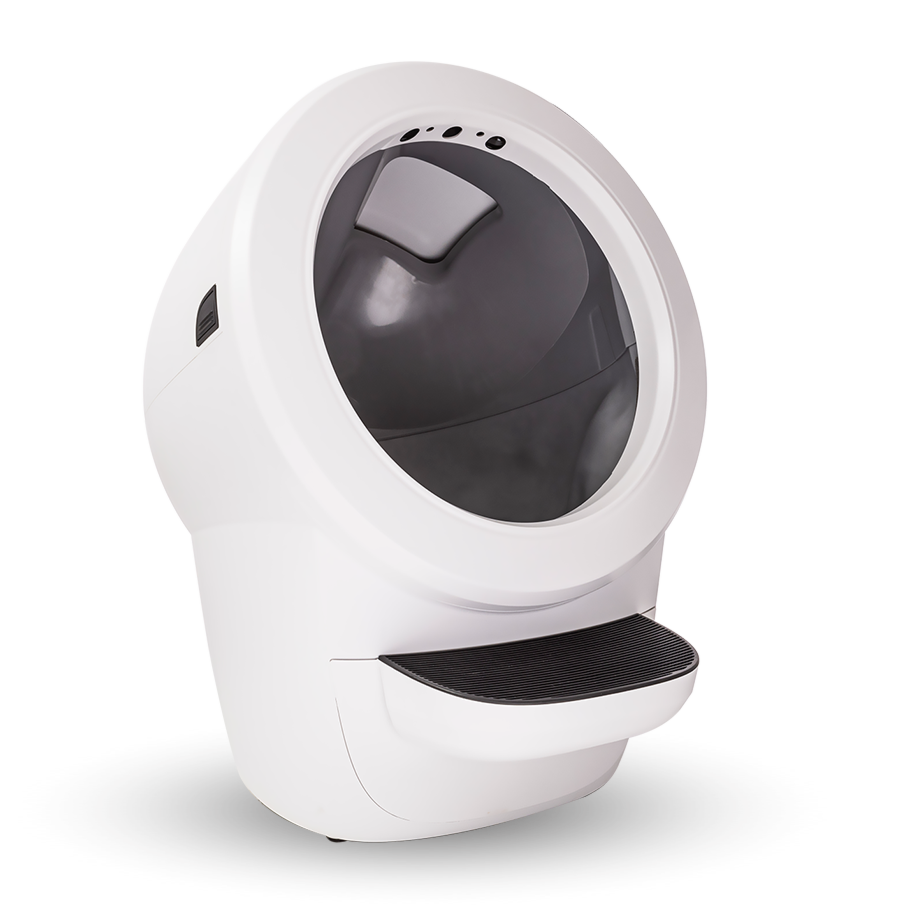
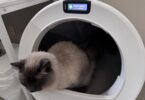
Stop scooping cat litter, neutralize litter box odors, and give kitty a clean bed of litter every time with Litter-Robot 4. Elegantly designed to maximize comfort for cats of all sizes, Litter-Robot 4 features advanced litter-sifting technology, reduced litter tracking, and real-time monitoring of waste and litter levels, plus tracks your cat’s weight with SmartScale® in the Whisker app.
⭐ GUARANTEED BEST PRICE ⭐
SAVE UP TO $150 WHEN YOU SHOP THROUGH OUR LINK*
More Enzyme Cleaners That Actually Deliver
While Kinderbean is a favorite in our tests, a couple of other enzyme cleaners consistently rise to the top in expert reviews:
- Nature’s Miracle Cat Stain & Odor Remover
This enzymatic spray eliminates both fresh and set-in cat urine stains with a light citrus scent. Users find it effective, affordable, and safe for fabrics and hard surfaces — though some users find the fragrance strong if you’re scent sensitive.
Nature’s Miracle Cat Stain & Odor Remover uses an enzymatic formula that breaks down messes on contact and keeps working until odors are gone. With a light citrus scent, it refreshes your home while being safe for pets when used as directed—trusted by pet parents for proven results.

- Rocco & Roxie Stain & Odor Eliminator
Certified by the Carpet & Rug Institute, this professional-strength formula tackles deep-set odors and organic stains. It’s praised for its fast-acting, pet-safe enzymatic action. It may be a bit strong-smelling at first, but the results speak volumes.
Rocco & Roxie Professional Strength Stain & Odor Eliminator is enzyme-activated to destroy urine, feces, vomit, and more at the source. Certified safe and chlorine-free, it leaves no residue and is gentle enough for all carpets. Works on furniture, floors, litter boxes, and beyond—trusted by pet parents everywhere.

How They Fit In Your Cleanup Toolkit
- Use Nature’s Miracle if you want a budget-friendly spray that handles most day-to-day messes. It works quickly on fresh accidents and holds up well on fabrics and hardwood—just test it first if you’re sensitive to scents.
- Reach for Rocco & Roxie when you need serious stain removal power. Perfect for older, set-in urine issues or heavily soiled carpets. Just be sure to ventilate well during use.
How to Use Enzyme Cleaner Properly (Most People Get This Wrong)
So, you bought the right cleaner. You found the pee spot. You sprayed… and somehow, it still smells.
The truth is, enzyme cleaners only work if you use them correctly. And most people rush the process.
To truly eliminate cat urine, you need to fully saturate the area, let the enzymes sit, and resist the urge to scrub too soon.
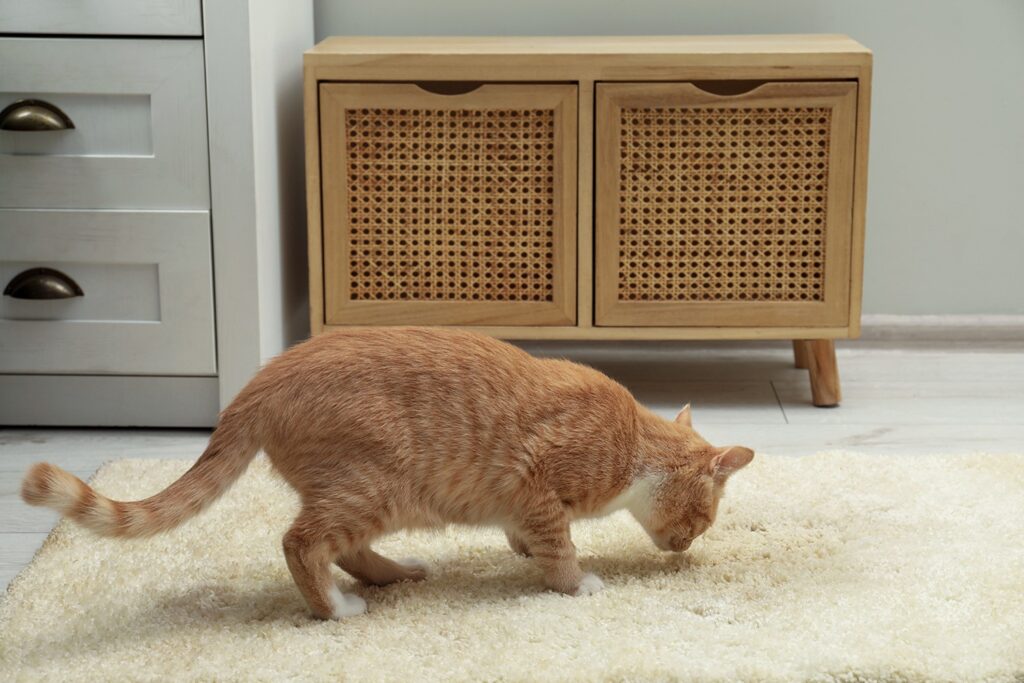
Step-by-Step: How to Use Enzyme Cleaner for Cat Urine
- Blot up as much urine as possible before applying anything.
(Don’t rub—it spreads the mess deeper into fibers.) - Saturate the area completely.
For carpet and upholstery, use a squeeze-top bottle like Kinderbean’s to soak the spot fully. - Let it sit.
- Carpets, rugs, fabrics: 12–24 hours
- Hard floors (sealed): 5–10 minutes
- Hard floors (unsealed): 3–5 minutes
Enzymes need time to eat the bacteria causing the odor.
- Gently blot or wipe, but don’t rinse.
Leave a little dampness behind so the enzymes can continue working as they dry. - Repeat if needed.
For older or deeper stains, you may need to treat the area more than once.
💡 Pro Tip: Don’t use other cleaners before enzyme treatment. Chemicals like bleach or vinegar can kill the enzymes before they have a chance to work.
Final Thoughts: You’re Not a Bad Cat Parent
If you’re dealing with pee puddles and weird smells, you’re not alone—and you’re definitely not doing it wrong.
Cats are complex, and sometimes even the best setups can go sideways.
The key is knowing how to handle it:
- Use an enzyme cleaner like Kinderbean to erase the scent completely
- Keep the litter box fresh and inviting (hello, self-cleaning convenience)
- And remember, most cats want to do the right thing—they just need the right environment
Have you found an enzyme cleaner that saved your rugs? Tried a self-cleaning litter box that changed the game?
Drop a comment and share your story. Your experience might be exactly what another cat parent needs to hear.

Leave a Comment