

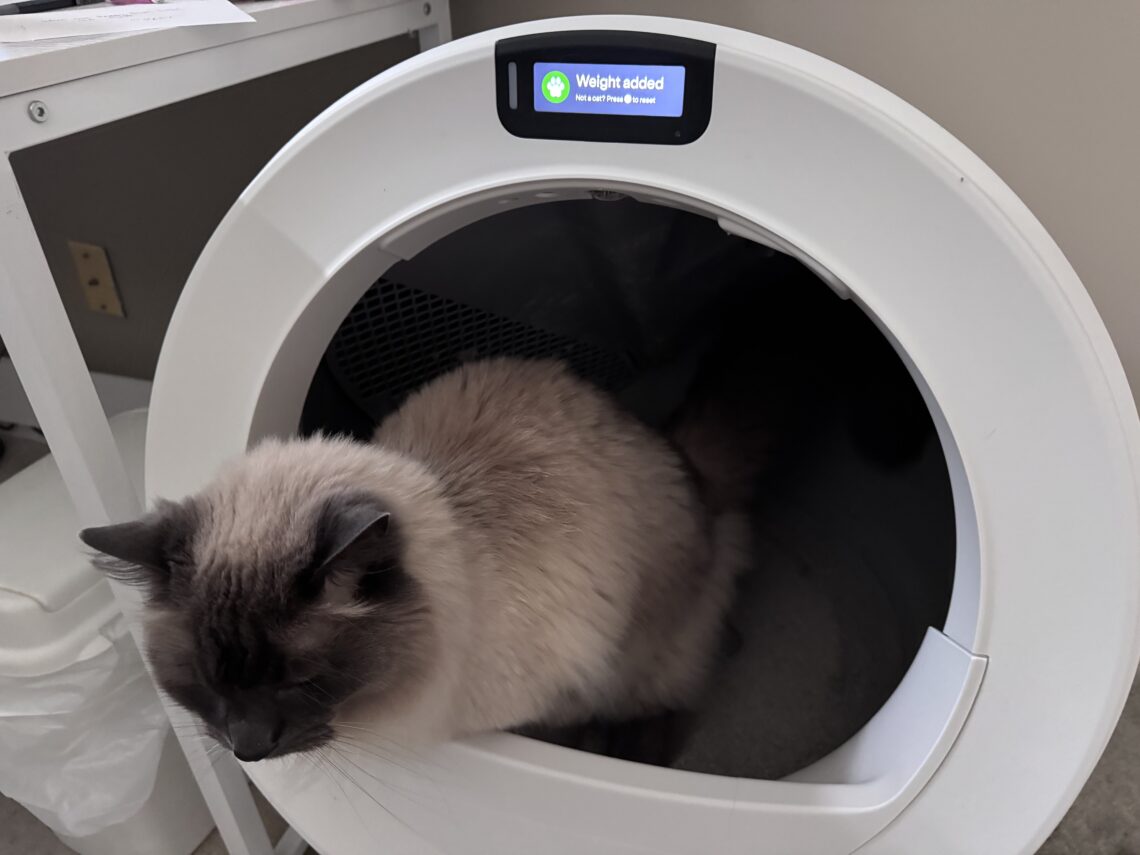
Nobody buys a litter box for the data. You buy it so you can stop scooping, and the app is the thing you open twice, decide it’s neat, and forget about. Whisker’s spec sheet says the Litter-Robot tracks your cat’s weight and visits. That is true, and it is also the least interesting way to describe what the feature does.
I went looking for the people who found out the interesting way. Owners on Reddit, on Best Buy, and on Whisker’s own review pages who got a notification, opened the app, and ended up at an emergency vet that night. Seven of their stories are below, on three different platforms; none of them paid to say it, and six of the seven end the same way: the vet confirmed it, and the cat is fine. The seventh I will get to, because leaving it out wouldn’t be fair.
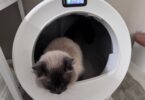
I have a personal stake in this one. Milo, my Balinese, spent most of this summer throwing up, on and off, for reasons that took his vet and me a while to sort out. He dropped about a pound or more over those weeks, and the thing I did not expect to lean on was the scale in our Litter-Robot 5 Pro. Every time he used the box, it weighed him, and I learned to read that number like a thermometer. A sudden drop meant he was probably vomiting again, whether I had seen it or not.
That turned out to be worth more than any feature on the box. I spend weekends at our place at the lake in the summer, and instead of spiralling from half an hour away, I would open the app and know. He’s steady and back to his old self now, and boring is the goal. The stories below are what it looks like when boring stops.
Whisker's spec sheet says the Litter-Robot tracks weight and visits. These are the owners who found out what that sentence means at 2am, told in their own words, with the honest limits attached.
FYI, if you shop through our links, we earn a commission at no extra cost to you.
Can a Litter Box Really Detect Illness?
A litter box cannot detect illness. It cannot run bloodwork, it cannot see inside a bladder, and it will never tell you what is wrong. What a Litter-Robot can do is count every visit, time it, and weigh your cat on the way in, then show you when any of those three numbers drift away from normal.
That matters because bathroom habits are among the earliest visible signs of several common feline illnesses, and they are the signs humans are worst at catching. Cats hide pain. They also use a box in a room we walk past, at hours we are asleep, in a house where two or three cats share the same litter. Nobody counts. The machine does.
I leaned on exactly this all summer with Milo, and the thing that surprised me was not the catching; it was the reassurance. A cat can look fine, eat a little, act normal, and still be quietly losing ground. The scale under the box does not fall for the performance. On the mornings his weight held, I could breathe. On the mornings it dipped, I knew a vet conversation was on the table before he gave me any other reason to think so.
The part I did not see coming was how much it helped on the way back up. Recovery is hard to trust when you have spent weeks bracing for the next bad day. Watching his weight flatten out and then hold, week over week, was what finally let me believe he had turned the corner. The same number that flagged the problem was also the one that told me it was over. It does not just catch the fall. It confirms the climb back.
So the honest version of the question is not “can it detect illness” but “can it notice a change fast enough to matter.” These owners say yes. Here they are.
|
Most Advanced
|
Mid-Range Option
|
Most Affordable
|
|
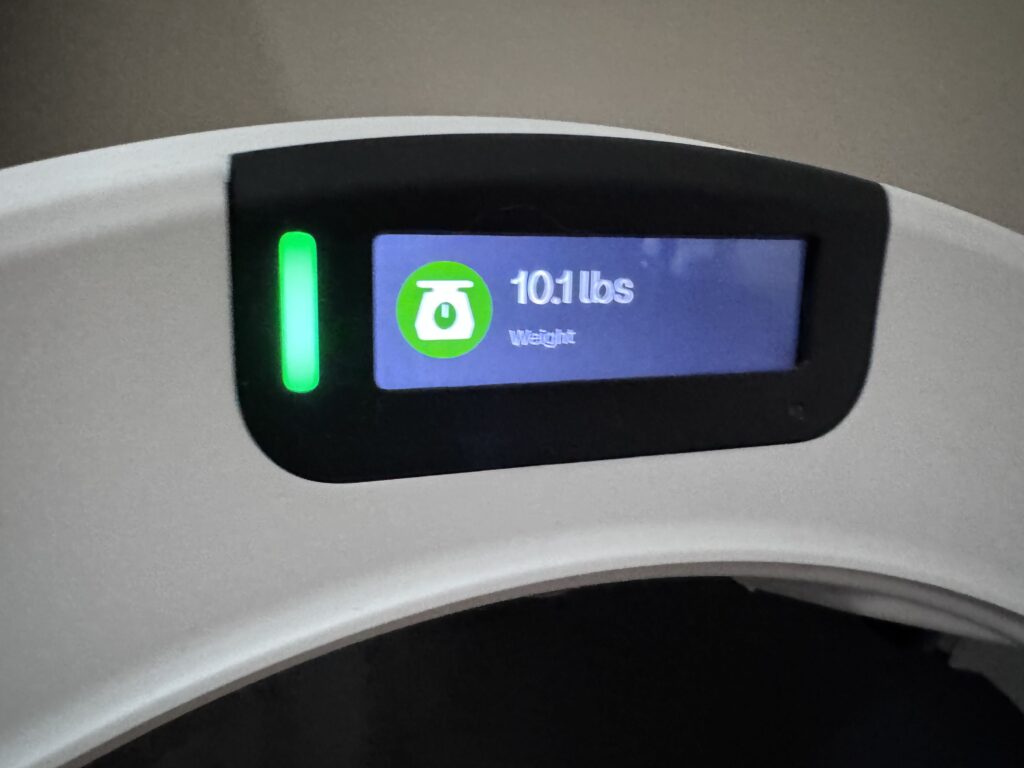
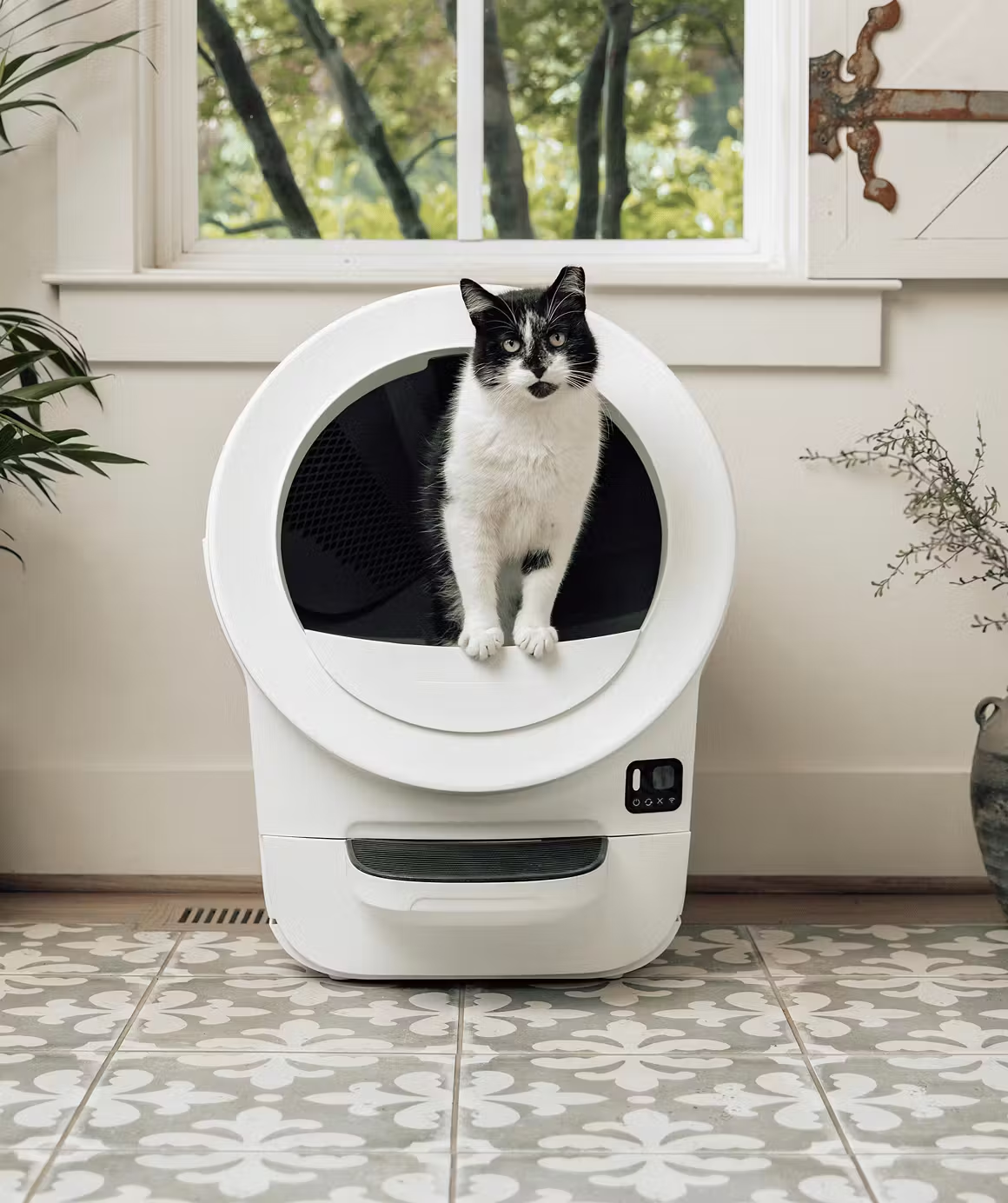
Whisker’s most advanced litter box yet. The Litter-Robot 5 Pro adds dual 1080p cameras, AI-powered cat recognition, and deeper Whisker+ insights to track bathroom habits and health trends. It’s a self-cleaning litter box that actually learns from your cat—delivering next-level convenience and peace of mind for tech-savvy pet parents. ⭐ BEST PRICE ON THE WEB⭐ SAVE UP TO $150! |
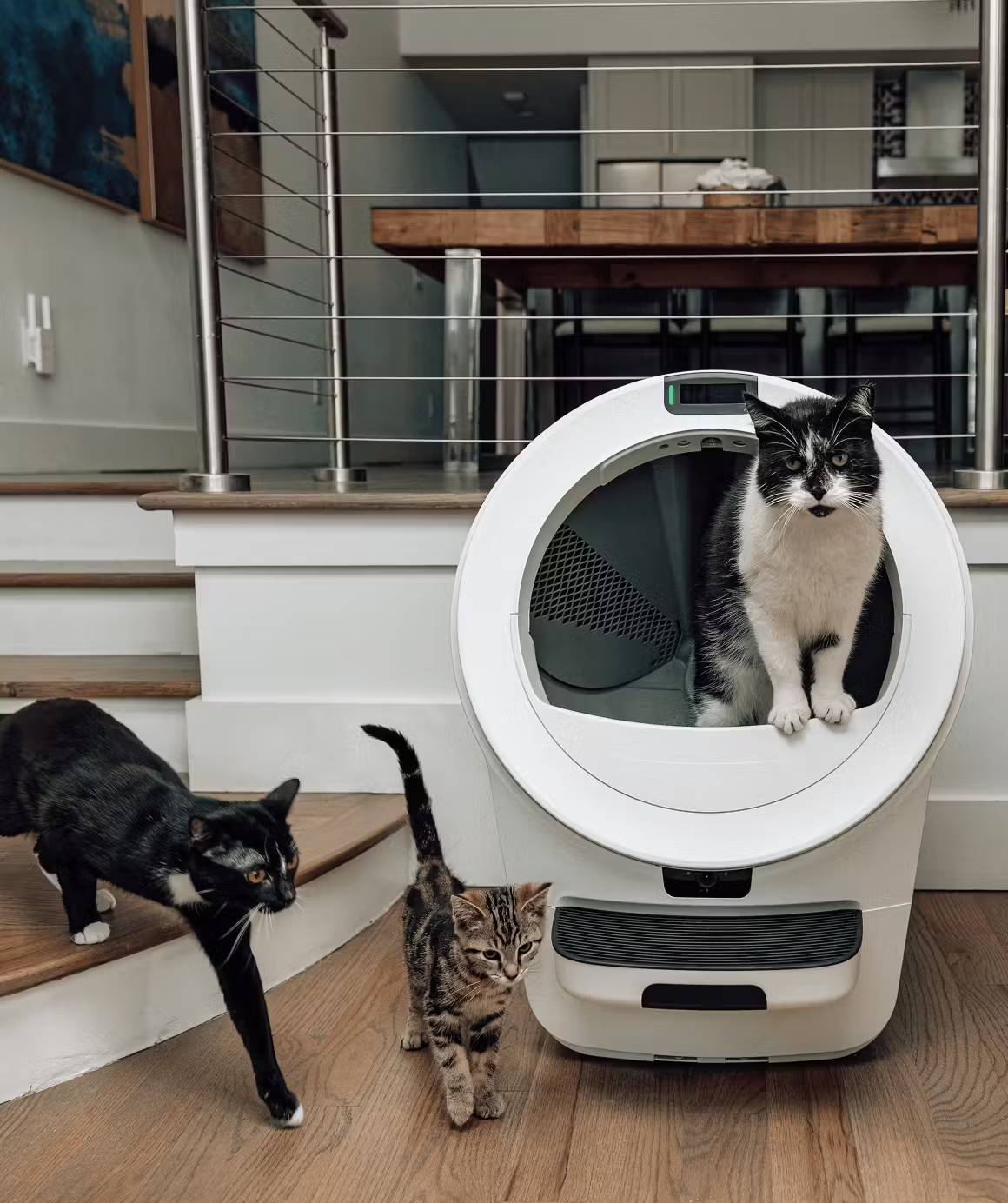
Meet the next generation of smart litter boxes. The Litter-Robot 5 features a sleek LCD display, redesigned waste drawer for fewer empties, customizable lights, and better odor control than ever. Multi-cat ready and app-connected, it’s the perfect balance of convenience, performance, and modern design for any cat household. ⭐ BEST PRICE ON THE WEB⭐ SAVE UP TO $150! |
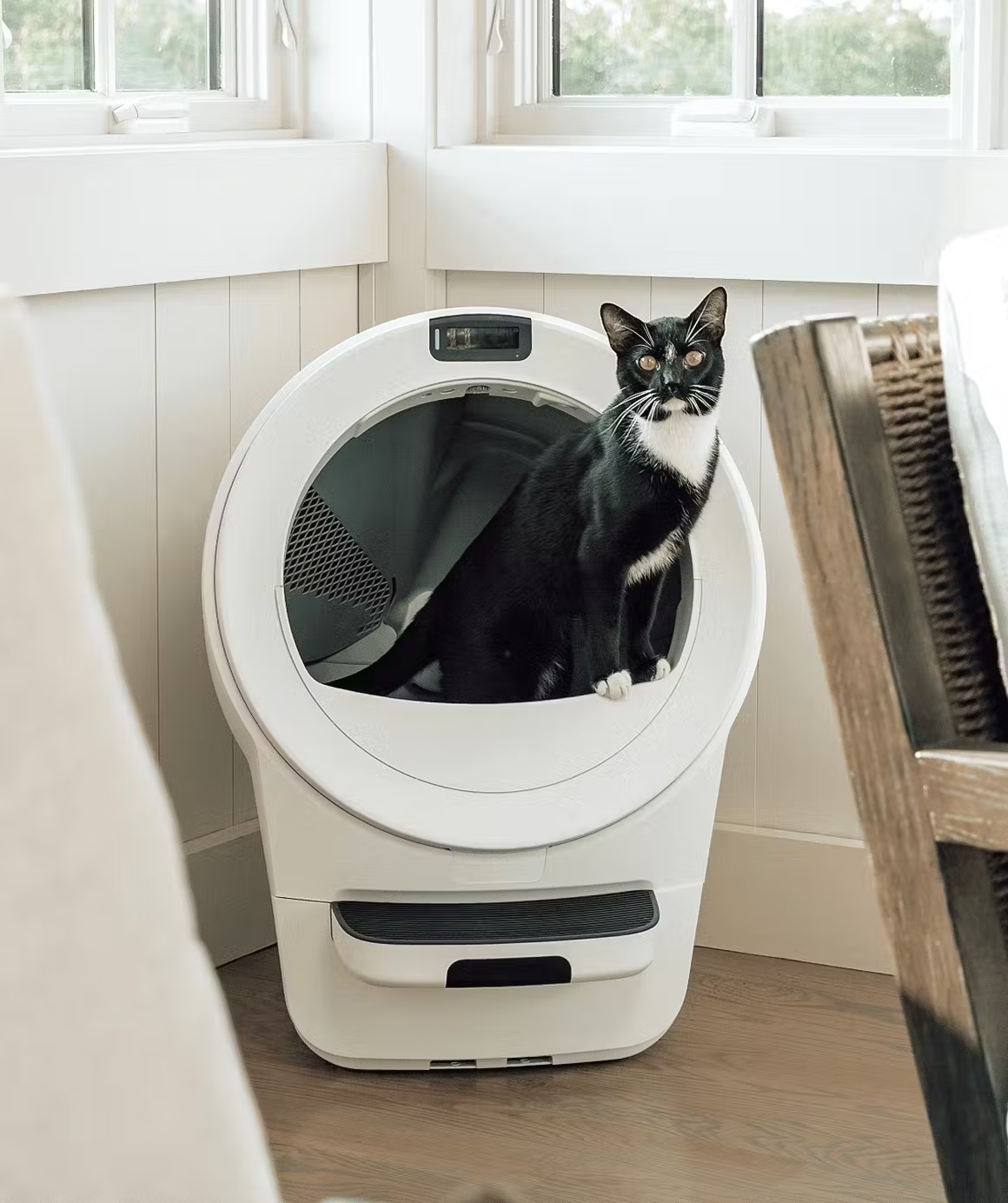
The most compact self-cleaning litter box from Whisker, perfect for smaller homes or 1–2 cats. The EVO keeps the same reliable automatic scooping, odor control, and Whisker app connectivity you know and love—just in a streamlined design that fits anywhere. Enjoy a cleaner home, fresher air, and less daily maintenance. BEST PRICE ON THE WEB SAVE UP TO $150! |
Whisker’s most advanced litter box yet. The Litter-Robot 5 Pro adds dual 1080p cameras, AI-powered cat recognition, and deeper Whisker+ insights to track bathroom habits and health trends. It’s a self-cleaning litter box that actually learns from your cat—delivering next-level convenience and peace of mind for tech-savvy pet parents.
⭐ BEST PRICE ON THE WEB⭐
SAVE UP TO $150!
Meet the next generation of smart litter boxes. The Litter-Robot 5 features a sleek LCD display, redesigned waste drawer for fewer empties, customizable lights, and better odor control than ever. Multi-cat ready and app-connected, it’s the perfect balance of convenience, performance, and modern design for any cat household.
⭐ BEST PRICE ON THE WEB⭐
SAVE UP TO $150!
The most compact self-cleaning litter box from Whisker, perfect for smaller homes or 1–2 cats. The EVO keeps the same reliable automatic scooping, odor control, and Whisker app connectivity you know and love—just in a streamlined design that fits anywhere. Enjoy a cleaner home, fresher air, and less daily maintenance.
BEST PRICE ON THE WEB
SAVE UP TO $150!
“The Vet Said That We Had Saved His Life”
AJ is a rescue with a resume. A severe infection as a kitten, bad enough that the vet told his owners to prepare for the worst. He pulled through. A couple of years later, an aggressive corneal sequestrum in one eye. He responded to treatment and it cleared completely. By the time the Litter-Robot enters this story, AJ has already used up more luck than most cats get.
Then, last year, his owner’s phone started buzzing more than usual.
“I suddenly began getting notifications that one of my LR4’s was cycling unusually frequently. A look at the Whisker app revealed that AJ was using the robot many more times than was normal. We took him to the vet the next day, and the day after that, he had an emergency cystotomy to remove 2 large stones from his bladder that were causing a near-total urinary blockage. The vet said that we had saved his life.”
~ an r/litterrobot owner, in the most-upvoted post in this entire research project
Notice what the signal actually was. Not a chart. Not a weight graph. Cycle notifications on a lock screen, the same alerts every owner gets and most of us swipe away. The machine was cleaning more often because AJ was going more often, and his owner was paying enough attention to ask why.
What I keep coming back to is the part after the happy ending, where the owner is honest about the counterfactual:
“I often wonder about whether I’d have noticed that he was having a medical emergency were it not for the Litter Robot raising the red flag. I hope that I would have, but I honestly don’t know.”
That is the whole article in two sentences. Every cat owner believes they would notice. This one had the receipts and still was not sure.
The Owner Who Had Already Lost One Cat This Way
If AJ’s owner was not sure he would have caught it, this next owner knew for a fact she would not have, because fifteen years earlier she had not.
Her cat Tyr started visiting the box more than usual back in May. Because the app gave her timestamped proof, she got him in so early the vet could not even see stones yet, only sediment. What followed was a hard road: a diet change, medication, then blood in his urine, then a full obstruction, five days in hospital, and eventually surgery once a stubborn stone finally showed itself on an ultrasound. He came through it. Then she said the thing that stopped me cold.
“It’s silly to say a litter box saved my sweet boy’s life, but it definitely gave me the info I needed to catch it early. I lost another cat to the same thing almost fifteen years ago and I’ve never forgiven myself for not catching it before he was too far gone. If I’d had this litter box, I know I could have caught it before it was too late.”
~ the owner of Tyr, in a post that drew more than a thousand upvotes
That is a person carrying fifteen years of guilt telling you what a visit counter would have been worth to her. AJ’s owner wondered. Tyr’s owner already knew the answer, because she had lived the version without the machine.
The $3,700 Morning, and What Acting Fast Actually Bought
Loki is six. His family had owned their Litter-Robot 4 for a little under a year when he came out of the bathroom yowling and licking his back end. Anyone who has lived with a male cat knows the cold feeling that arrives with that sentence.
What they had that most families do not was a timeline.
“Thanks to the LR4 tracking I was able to see that beginning that morning he attempted to use the bathroom several times in a row and because I attached a camera to it I was also able to see he was peeing very, very little or not at all. This helped the ER vet to assess him much quicker.”
~ an r/litterrobot owner, the night of the emergency
Loki had a blockage, crystals, and bacteria in his urine. Initial treatment ran about $3,700. Here is the part I would underline if this were a printed page:
“But with how quickly we were able to act only his proteins were a little high. All other organ and kidney function was still fantastic.”
A urinary blockage is not just painful. Left for a day or two it starts damaging the kidneys, and kidney damage does not undo. Speed did not just get Loki a faster diagnosis. It protected the organs he will need for the next twelve years. The app did not do that. It did let the owner walk into the ER and say “it started at 9am, here are the visits, here is the video,” which is the difference between a vet guessing and a vet knowing.
Caught Before Surgery, Not After
This one comes from Whisker’s own review pages, which sounds like the least trustworthy place to find it until you read the details, because nobody invents oxalate stones for a five-star review.
The owner had two cats, and one of them had a history of calcium oxalate bladder stones, the kind vets warn you have a nasty habit of coming back. Her litter boxes sat somewhere she could not see the cats coming and going, so she had no idea how often either one was using them. Then she set up the Litter-Robot.
“In just getting the LR up and running I was alerted that my girl that had stones before was using the box very frequently. We took her to the vet and her stones had JUST started to come back. We caught them in time to flush with a catheter and didn’t need surgery. The LR paid for itself just in catching her bathroom habits and avoiding surgery.”
~ a reviewer on Whisker’s own site, two cats
I like this story because it is one of the least dramatic here and the most useful. Just a machine counting visits in a room nobody was watching, and a cat who got a catheter flush instead of a second surgery. The owner’s math is right, too. A cystotomy costs more than a Litter-Robot. Considerably more.
The Cat Who Quietly Stopped Showing Up
The first three stories are about a cat going more. This one is about a cat going less, which is harder to notice and, in a multi-cat home, almost impossible.
“My oldest cat has been using our LR4 consistently for his whole life. I realized this week that for the past two weeks he’s been sneaking down to the basement to use an old dog bed as a bathroom. I only noticed thanks to a 2nd week of half the expected output (we have 2 cats) and checking the app saw that he’s gone a full week without a check-in.”
~ an r/litterrobot owner
Two cats, one box, and the drawer filling at half its usual pace. The signal was an absence. The app showed a cat who had not checked in for a week, and a home-automation log confirmed the slide had started before that. Without the count, this owner finds out the old-fashioned way: by smell, weeks later, when the dog bed gives up its secret.
A cat that abandons a box it has used its whole life is telling you something. Sometimes it is a grudge about a new litter. Sometimes it is pain, constipation, a blockage, or arthritis making the climb hurt. Either way it is a vet conversation, and the machine turned a slow mystery into a one-week question.
The Undramatic Ones (Which Are Most of Them)
Not every catch is a dramatic story. Most of them, honestly, are a habit. A whole chorus of owners describe something closer to routine maintenance than rescue, and that is exactly why I trust them.
“The app’s visit tracking has also been invaluable; on a few occasions, it helped us identify potential constipation and UTIs that we were then able to address with our vet.”
~ an r/litterrobot owner who started on the Litter-Robot 3 and pre-ordered the 4 the day it launched
“The tracking in the app has helped me catch a UTI very early on!”
~ a reviewer on Whisker’s own site, two cats, two units
“One of them ended up with a UTI that we caught the day it started happening. We took him to the vet and got him treatment right away, they saved my baby’s life. I can see exactly which cat is using it at what time due to their weight size.”
~ a verified Best Buy purchaser with two male cats
Three platforms, owners who have never met, the same sentence structure: the app flagged it, we went, the vet confirmed it. A Tom’s Guide editor wrote up their own version too, nearly two and a half years into owning one, after the weight tracking flagged a medical issue in their cat. When people with nothing in common keep landing on the same story, I stop calling it an anecdote.
And the Owners who Bought it for Exactly This
Reading through the threads, a second group kept appearing: people who did not stumble onto the health data but bought the machine because of a diagnosis they already had. Their reasons, in their own words, read like a vet’s waiting room:
- Kidney disease. “I got it to help track my cats weight and box visits as she was recently diagnosed with some kidney issues.” Another owner’s cat has “only about 20% kidney function left” and they wanted “early detection of any shifts.”
- Post-surgery recovery. “One of our three cats recently had kidney surgery. It’s important for us to know when our recovering cat urinates, how frequently, and to distinguish this activity from the other two cats.”
- Hyperthyroidism. “I have a 16 yo with hyperthyroidism and kidney issues and I really need to monitor his weight.”
- IBD. “To monitor one of my cat’s weight because he has IBD.”
- Urinary history. “I own a kitty who went through urinary blockages and also GI issues. Being able to share the data with my vet is just tremendously helpful.”
Kidney disease came up six separate times without anyone asking. Blockages three times. Bladder stones, cystitis, IBD, hyperthyroidism, blood in the urine, constipation. The owners already living with a sick cat figured out what the feature was for before the marketing did.
The One Where the Scale Did the Work
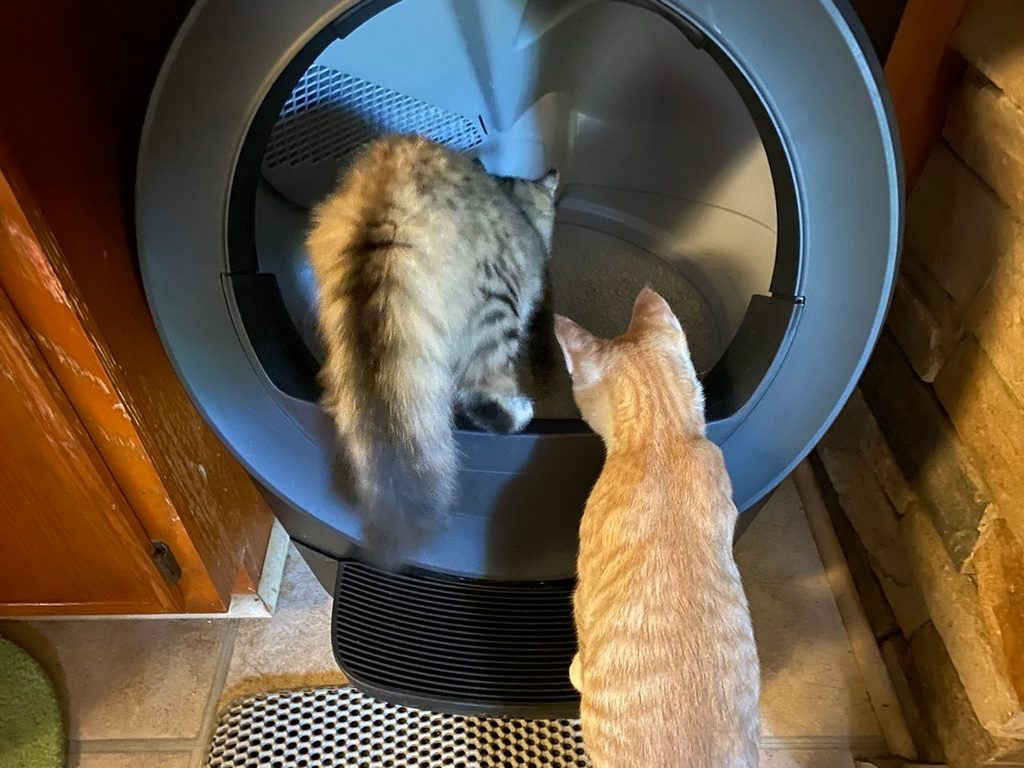
Every story so far turned on how often a cat visited the box. This one turned on what the cat weighed, which is the slower, sneakier signal and the one I care about most after this summer.
“Because of the weight and usage tracking, I was able to pick up on my cat’s subtle but steady weight loss and litter box usage increase. This led to an early diagnosis of diabetes and because it was caught early, he’s a good candidate for this new liquid diabetes medication which means no needles or ear prickling.”
~ an r/litterrobot owner, sharing a week of weight readings
Catching feline diabetes early does not just start treatment sooner. It can change the treatment itself. Because this cat was caught before the disease had done its damage, he qualified for a newer once-daily liquid medication instead of twice-daily insulin injections and blood draws for the rest of his life. The owner posted a week of readings showing the exact day the weight stopped dropping. That day was the first day of medication.
A pound of slow weight loss is the single hardest thing for a human to see, because we see our cats every day and the change hides in the noise. It is the one signal you almost cannot catch by eye, and it is the one a scale under the box catches without trying.
What These Owners Have in Common: Four Signals
Strip the stories down and there are only four things the machine noticed. Everything above is a variation on one of these.
| The signal | Who saw it | What it can point to |
|---|---|---|
| More visits than usual | AJ, Loki, the oxalate-stone cat, the Best Buy UTI | Blockage, stones, cystitis, UTI, diabetes, kidney disease |
| Longer visits than usual | Loki | Straining, which can mean obstruction or constipation |
| Fewer visits, or none | The basement dog bed | Blockage, constipation, pain, arthritis, or a cat going somewhere else |
| Weight drifting down | The diabetes cat, Pepper | Diabetes, kidney disease, hyperthyroidism, IBD, dental pain |
The first three are fast. They happen within a day, sometimes within a morning, and the free version of the app is enough to see them. The fourth one is slow, and slow is where humans fail.
Cats with chronic kidney disease lose a median of 8.9% of their body weight in the year before diagnosis, and the loss is already measurable three years out (Freeman et al., Journal of Veterinary Internal Medicine, 2016; 569 cats). On a 10-pound cat that is roughly an ounce a week. You see that cat every single day. You will not notice an ounce a week. A scale that weighs him every time he pees will.
Free versus paid, stated plainly
On the Litter-Robot 4, 5, 5 Pro and EVO, the app gives you the last seven days of visits and individual cat weights for free, plus the cat identification that tells the machine who is who. Whisker+ (about $8 a month) unlocks up to two years of history, weight and visit trends, duration trends, daily recaps, and on the 5 Pro, anomaly alerts and camera-based cat ID.
So here is the honest split. AJ, Loki, the stones and the UTIs were all caught inside the free window, because they were sudden. Pepper’s slow weight loss and the ounce-a-week kidney math need the trend, and the trend is the paid part. Today’s number is free. The direction it is heading costs money, and for the slow illnesses, the direction is the entire point.
If This Is Happening Right Now
A cat straining, visiting repeatedly, and producing little or no urine is a medical emergency. Especially a male cat.
A urinary obstruction can cause kidney failure, heart rhythm problems, or death within 24 to 48 hours. If your cat has not urinated in 12 hours, treat it as critical. Do not wait for morning. Call an emergency vet now.
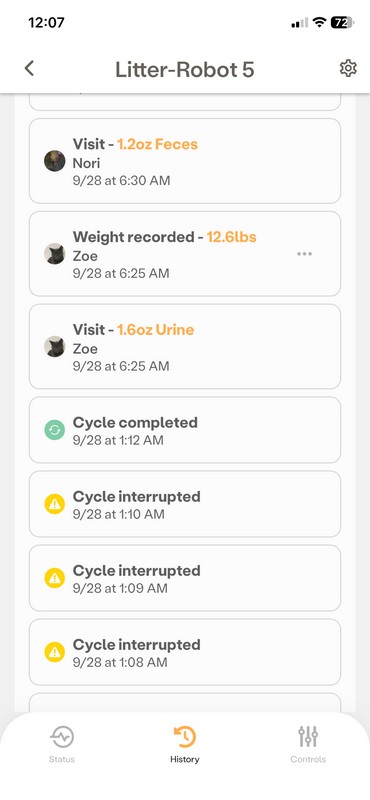
In the app this looks like: repeated visits in quick succession, unusually long visits, visits with little or no output, or a sudden spike in cycle notifications. Just as important, it can look like nothing at all. A cat cycling in and out too fast can stop the machine from completing a cycle, so no alert is sent. Litter thrown around the box or a cat crying near it can be your only warning.
Alongside it, watch for: yowling, licking the genitals, hiding, vomiting, a hard or painful belly, or going outside the box.
Pepper, and the Part I Am Not Going to Skip
Six of the seven stories end well. I am including the seventh because leaving it out would make this an advertisement, and because the owner told it with more grace than I could add to.
“Pepper suffered from cystitis for quite some time which prompted us to purchase a LR4 in 2023 to monitor her usage. Around July 2025 we noticed that Pepper had been losing weight inexplicably, and the LR4 historical data showed that her usage had sharply increased in the preceding months. We took her for a lot of testing and medicine, but she unfortunately passed in January 2026.”
~ an r/litterrobot owner
The data worked. The weight went down, the visits went up, the history showed it clearly, and her people acted on it. Pepper still died. That is not a failure of the machine and it is not a failure of the owners. It is what illness sometimes does regardless of how early anyone looks.
Catching a change early improves the odds. It does not guarantee an outcome. Every owner in this article would tell you the same thing: the machine did not treat anything. It told them to look.
What the Machine Can’t Do
Keeping these stories honest means keeping the limits next to them. A few things a Litter-Robot will never do, and a few things it does imperfectly:
- It does not diagnose. More visits could be a blockage or a cat who discovered the water fountain. The app hands you a question, not an answer.
- It does not replace bloodwork. Kidney disease, thyroid problems and diabetes are confirmed in a lab, not a litter box. For a cat over ten, the app is a reason to book the annual panel, not a reason to skip it.
- It can mix up similar-weight cats. The weight sensor identifies cats by comparing each reading to a seven-day history. Two cats within a pound of each other can blur together, which is exactly what the camera-based ID on the 5 Pro exists to fix.
- One weird reading is not a trend. Dirty sensors, a dark or crumpled liner bag, litter piled in the base, or a cat who paused halfway in can all produce a strange number. Owners in the threads report false weights, and they are almost always a cleaning or calibration issue.
- Duration tracking is new. Whisker added visit-length tracking in September 2025, so there is no earlier history for it. Loki’s owner saw duration because they had a camera pointed at the unit, not because the app had years of data.
- It only sees the box. A cat who starts drinking from the tap, eating less, or hiding under the bed is giving you signals the machine cannot hear. The app is one input. You are still the one who knows the cat.
Before you panic over a single odd reading, rule out the boring explanations first. Empty the drawer and re-zero the scale, swap in a white liner bag pressed flat, vacuum stray litter out of the base, and check whether a second cat could have been on the step. Then look at three days of readings, not one. A trend survives a cleaning. A glitch does not.
How to Actually Use This Without Becoming a Nervous Wreck
I am the last person to lecture anyone about checking the app too often. But the owners who caught something did a few specific things, and none of them involved staring at a graph every night.
- Turn the notifications on, but do not trust them alone. AJ’s owner caught a near-total blockage from cycle alerts on a lock screen, so yes, leave them on. But here is the catch almost nobody mentions: if a cat goes in and out fast enough, the machine never finishes a cycle, so it never sends an alert. One owner’s cat used the box more than thirty times in three hours during a full blockage and the app stayed silent the whole time. What tipped her off was litter flung on the floor and a cat crying more than usual. The notifications are a safety net with a real hole in it. Your own eyes cover the hole.
- Learn your baseline in the first two weeks. How many visits a day, roughly how long, what the weight reads. You do not need to memorize it. You need to know what “normal” looks like well enough to spot “not normal.”
- Treat a change that lasts 48 hours as a phone call, not a worry. Sudden straining or repeated empty visits is an emergency, full stop. A gradual shift over two days is a vet appointment, even if the cat seems fine. Especially if the cat seems fine.
- Screenshot the app before you go. Loki’s ER vet got a timeline instead of a guess. Every owner here who mentioned their vet said the same thing: the data made the appointment faster and the diagnosis more confident.
Frequently Asked Questions
How often should a cat use the litter box?
Most healthy adult cats urinate two to four times a day and pass stool about once a day, though diet, water intake and age all shift the number. Your cat’s own baseline matters far more than the average. A cat who normally goes three times and suddenly goes eight is telling you something, even if eight is not unusual for a different cat.
Can a Litter-Robot detect a UTI?
Not directly, but a UTI usually shows up in the app as more frequent, shorter visits within a day or two of starting. Three owners in this article caught UTIs that way and had them confirmed by a vet. The app flags the change; the vet confirms the infection with a urine test.
Can a litter box tell if my cat has kidney disease?
It cannot diagnose it, but it can catch the two earliest signs: slow weight loss and more frequent urination. Cats with chronic kidney disease lose a median of 8.9% of body weight in the year before diagnosis, according to a 2016 study of 569 cats, and that is invisible to the naked eye. A downward weight trend in the app is a reason to ask your vet for a kidney panel, especially in a cat over ten.
My cat is losing weight but acting normal. Should I worry?
Yes, gently. Weight loss in a cat who seems fine is one of the most common early signs of kidney disease, hyperthyroidism and diabetes, all of which cats hide well. If the app shows a steady downward trend over a few weeks rather than a one-day dip, book a vet visit and bring the graph.
What does it mean if my male cat keeps going to the litter box every few minutes?
Treat it as an emergency. Repeated visits with little or no urine is the classic sign of a urinary obstruction, which can become fatal within 24 to 48 hours in male cats. If he has not produced urine in 12 hours, or is straining, yowling or hiding, go to an emergency vet now rather than waiting for the morning.
Why did my cat suddenly stop using the litter box?
Sometimes it is a litter grudge or a new stressor. Sometimes it is pain, constipation, a urinary problem or arthritis making the box uncomfortable. One owner in this article only discovered his senior cat had moved to a basement dog bed because the app showed a week without a check-in. A sudden stop is worth a vet call, particularly in an older cat.
Is the Litter-Robot weight sensor accurate?
Accurate enough for trends, imperfect for single readings. It weighs the cat on entry and identifies them using a seven-day weight history, so cats within a pound of each other can get mixed up. Dirty sensors, dark liner bags and stray litter in the base all cause odd readings. Look at several days, not one.
Do I need Whisker+ to use the health tracking?
No for the fast stuff, yes for the slow stuff. The last seven days of visits and individual weights are free on the Litter-Robot 4, 5, 5 Pro and EVO. Whisker+ (about $8 a month) adds up to two years of history and the weight, visit and duration trends that reveal gradual changes like the ounce-a-week kidney pattern.
Final Thoughts
None of these owners set out to monitor their cat’s health. They bought a box to stop scooping, and it gave them something they didn’t know to ask for.
As for Milo? He’s totally unbothered. He is back to eating, napping, and watching the world go by from the windowsill. His weight is steady, his graph is boring, and boring is my favorite thing in the world for him right now. Do I still check it more than I need to? Absolutely. After the summer we had, I figure I have earned the right to be a bit of a helicopter cat mom. I’m thankful I have something that makes it so easy to track his weight.
|
Most Advanced
|
Mid-Range Option
|
Most Affordable
|
|
Whisker’s most advanced litter box yet. The Litter-Robot 5 Pro adds dual 1080p cameras, AI-powered cat recognition, and deeper Whisker+ insights to track bathroom habits and health trends. It’s a self-cleaning litter box that actually learns from your cat—delivering next-level convenience and peace of mind for tech-savvy pet parents. ⭐ BEST PRICE ON THE WEB⭐ SAVE UP TO $150! |
Meet the next generation of smart litter boxes. The Litter-Robot 5 features a sleek LCD display, redesigned waste drawer for fewer empties, customizable lights, and better odor control than ever. Multi-cat ready and app-connected, it’s the perfect balance of convenience, performance, and modern design for any cat household. ⭐ BEST PRICE ON THE WEB⭐ SAVE UP TO $150! |
The most compact self-cleaning litter box from Whisker, perfect for smaller homes or 1–2 cats. The EVO keeps the same reliable automatic scooping, odor control, and Whisker app connectivity you know and love—just in a streamlined design that fits anywhere. Enjoy a cleaner home, fresher air, and less daily maintenance. BEST PRICE ON THE WEB SAVE UP TO $150! |
Whisker’s most advanced litter box yet. The Litter-Robot 5 Pro adds dual 1080p cameras, AI-powered cat recognition, and deeper Whisker+ insights to track bathroom habits and health trends. It’s a self-cleaning litter box that actually learns from your cat—delivering next-level convenience and peace of mind for tech-savvy pet parents.
⭐ BEST PRICE ON THE WEB⭐
SAVE UP TO $150!
Meet the next generation of smart litter boxes. The Litter-Robot 5 features a sleek LCD display, redesigned waste drawer for fewer empties, customizable lights, and better odor control than ever. Multi-cat ready and app-connected, it’s the perfect balance of convenience, performance, and modern design for any cat household.
⭐ BEST PRICE ON THE WEB⭐
SAVE UP TO $150!
The most compact self-cleaning litter box from Whisker, perfect for smaller homes or 1–2 cats. The EVO keeps the same reliable automatic scooping, odor control, and Whisker app connectivity you know and love—just in a streamlined design that fits anywhere. Enjoy a cleaner home, fresher air, and less daily maintenance.
BEST PRICE ON THE WEB
SAVE UP TO $150!





Leave a Comment