


Cats have many fine qualities. Being flexible about the cleanliness of their bathroom generally isn’t one of them.
That can make traveling a little complicated, whether you’re gone for a weekend here and there or regularly away for work. You still need someone checking on your cat, of course. An automatic feeder, water fountain, and self-cleaning litter box do not turn a cat into a houseplant that can be abandoned for a week.
But the right litter box setup can make things much easier for both your cat and whoever is looking after them while you’re gone.
For frequent travelers, I think an automatic litter box is the most practical option. It keeps the litter cleaner between visits from your pet sitter and dramatically reduces how much scooping someone else has to do.
If you prefer a traditional litter box, though, you can absolutely make that work, too. You just need to plan a little differently.
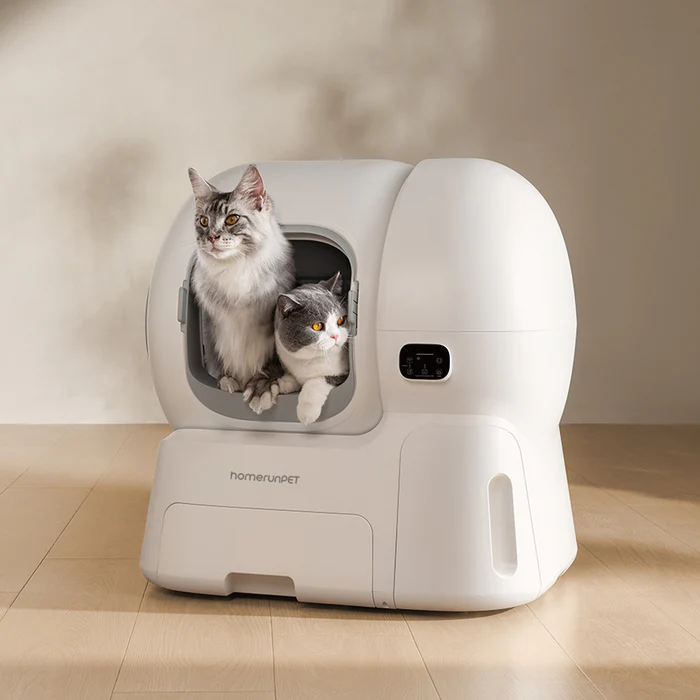
The HomerunPET CS106 is one of the largest automatic litter boxes I’ve tested, with a roomy 106L dome and oversized 12L waste bin. Designed for big cats and real multi-cat homes, it also features an auto-refill system, ultra-quiet operation, and strong safety sensors. If you want a more hands-off litter setup, this one delivers.
BEST PRICE GUARANTEE
SAVE $60 WITH COUPON CODE PAWZ
1. Set Up an Automatic Litter Box for Easier Travel
If you travel frequently, a reliable automatic litter box is about as close as you can get to having your normal litter routine continue while you’re gone.
Instead of waste sitting in the box until someone comes over to scoop it, the machine cleans after your cat uses it and deposits the waste into a separate compartment. Your cat gets a cleaner bed of litter throughout the day, and your sitter mainly needs to make sure everything is operating normally.
That’s a pretty substantial upgrade over leaving them a scooper and saying, “Good luck in there.”
Choose a Box With Enough Capacity
Waste drawer capacity matters more when you’re traveling than it might during everyday use.
A smaller waste compartment that works perfectly well when you’re home to empty it frequently can become a problem if you’re relying on a pet sitter who only visits once or twice a day.
Look for an automatic litter box designed to accommodate your number of cats, with a waste bin large enough to comfortably handle their normal output between emptying.
This is one reason the Homerunpet CS106 Self-Cleaning Litter Box makes sense for a travel-friendly setup. It’s designed with larger cats and multi-cat households in mind, including a roomy interior and a large-capacity waste collection system.
That extra capacity doesn’t mean you should fill the litter, pack your suitcase, and assume the machine will take care of everything indefinitely. It does give you more breathing room, especially in a multi-cat household where a small waste drawer can fill surprisingly fast.
Set It Up Well Before Your Trip
Please don’t introduce a brand-new automatic litter box the night before you leave. Cats occasionally like to remind us that we’re not actually in charge of anything.
Set up the new box several weeks ahead of your trip if possible. Give your cat plenty of time to investigate it, use it consistently, and get accustomed to its cleaning cycle.
If you’re transitioning from a traditional box, you may want to leave the old box nearby temporarily while your cat adjusts.
More importantly, make sure you have time to learn how the machine behaves.
You’ll want to know:
- How quickly your cat fills the waste drawer
- How often litter needs to be topped off
- Which litter works best with the machine
- Whether your cat has any quirks about using it
- What normal app notifications look like
- What happens if the box detects a problem
You don’t want your first “something isn’t right with the litter box” notification arriving when you’re three states away.

Take Advantage of Remote Monitoring
A connected litter box can give travelers something a traditional box can’t: information.
Depending on the model, smart litter boxes may track visits, cleaning cycles, waste levels, weight, or other usage data through an app.
The CS106, for example, connects to the Homerunpet app so you can monitor litter box activity remotely.
That doesn’t replace an actual person checking on your cat. What it can do is give you another useful window into what’s happening at home.
If your cat normally uses the litter box several times a day and suddenly you aren’t seeing any activity, that’s information worth passing along to whoever is caring for them.
Just remember that litter box data isn’t a veterinary diagnosis. Think of it as another piece of information, not a remote cat doctor living in your phone.
Keep a Backup Litter Box Available
Even with a reliable automatic litter box, I like the idea of having a backup when you’re going to be away.
Electronics can malfunction. Power can go out. A curious cat can create a situation nobody anticipated. Technology is wonderful right up until it decides it has other plans.
A simple traditional litter box gives your cat somewhere to go if the automatic box becomes unavailable.
You don’t necessarily need to keep the backup beside the automatic box every day. But if you’re leaving town, setting one up in an accessible location gives you an extra layer of protection.
This open-top litter box from Frisco by Chewy provides a roomy, private place for cats to do their business. To keep litter and spray inside the box, there’s a rim around the sides and back wall that also acts as a privacy shield. Cats can step in and out of the box easily through the lowered front side, and the removable top rim and open-box design make it easy to scoop the litter or spot clean small messes. This litter box is made with BPA-free plastic that’s recyclable, so it’s ready for plenty of digging and pawing around, and perfect for eco-minded households.

Make Things Easy for Your Pet Sitter
Before leaving, show your sitter how the litter box works. Don’t assume they’ll intuitively know how to open the waste compartment, add litter, clear an error, or restart the machine.
Leave extra waste bags and litter somewhere obvious, and give them simple instructions for the basics.
If the box has an app, you can usually handle most monitoring yourself. Your sitter mainly needs to know what to physically check and what to do if something looks wrong.
And yes, they should actually look at the litter box during every visit. “The app says it’s fine” isn’t quite the same thing as walking over and confirming that it is.
2. How to Set Up Regular Litter Boxes When You Travel
Not everyone wants an automatic litter box, and that’s fine. A traditional box can work perfectly well while you’re traveling. It just requires more hands-on maintenance.
The biggest difference is simple: someone needs to scoop it.
There isn’t a safe trick for turning a regular litter box into a weeklong unattended bathroom. Adding six inches of litter doesn’t magically create a self-cleaning system. It mostly creates a very heavy litter box.
Add an Extra Box Before You Leave
If your cat normally uses one litter box, consider setting up a second one while you’re away. For multi-cat households, additional boxes become even more important because waste accumulates much faster.
Extra boxes give cats another clean place to go between sitter visits and provide some insurance if one becomes unusually dirty.
Ideally, don’t put every box directly beside the others. Cats may treat several boxes lined up together as essentially one bathroom area. Putting them in different accessible locations gives your cat more meaningful choices.
Use Large, Open Boxes When Possible
For travel, capacity beats aesthetics.
A large litter box gives your cat more usable clean space between scooping sessions. If you’re shopping specifically for a travel backup, a simple oversized plastic litter pan may be more useful than a small decorative box designed to disappear into your décor.
Whatever box you use, stick with something your cat already likes whenever possible. Your vacation isn’t the ideal time to introduce a completely different litter box style.
This simple, beautiful, redesigned version of the classic litter box features an integrated scoop, dustpan, and hand brush. It’s compact for small spaces, but spacious enough for your cat’s comfort. The Cove is made out of thick matte plastic that’s easy to wipe clean and feels exceptionally sturdy. Cleaning the litter box will never be your favorite chore, but you can make the best of it with the Cove (no liners necessary)

Don’t Suddenly Change the Litter
This applies to automatic and traditional boxes. Stock up on your cat’s usual litter before you leave. Don’t decide that travel week is the perfect opportunity to try that fascinating new litter you found online.
Cats can be remarkably particular about texture and scent. Changing the litter, box, and household routine simultaneously gives you several variables to troubleshoot if your cat suddenly stops using the box.
Boring consistency is your friend here.
Arrange for Regular Scooping
Traditional litter boxes should be scooped at least daily while you’re away, and some households will need more frequent attention.
If several cats share the boxes, twice-daily scooping may make more sense.
This is where automatic boxes have a clear advantage for frequent travelers. A sitter can concentrate on your cat’s food, water, medication, playtime, and general well-being rather than spending a significant chunk of every visit maintaining litter boxes.
3. Don’t Rely on the Litter Box to “Watch” Your Cat
Smart pet products make traveling easier, but they’re not substitutes for human care.
Even if you have an automatic litter box, feeder, fountain, cameras, and enough sensors to make your living room resemble a small NASA facility, someone still needs to physically check on your cat.
Cats can get sick. Water fountains can stop working. Feeders can jam. Cats can vomit, get into things, or decide that the cardboard box you forgot to throw away is now their primary residence.
For most cats, arrange for at least one in-person visit every day, with more frequent care when appropriate for their age, health, medications, temperament, or other needs.
The technology should support your sitter, not replace them.
4. Do a Trial Run Before a Longer Trip
One of the smartest things you can do is test your travel setup while you’re still home. For a few days, maintain the litter boxes according to the same schedule your sitter will follow.
If you’re using an automatic box, see how long the waste drawer realistically lasts. Pay attention to litter levels and app notifications.
With traditional boxes, see what they actually look like after 12 or 24 hours without scooping.
This gives you real-world information based on your cats, rather than whatever theoretical capacity is printed on the box.
A household with one small cat has very different litter requirements from a household with three 15-pound cats who apparently consider the litter box a competitive sport.
5. Have a Power-Outage Plan for Automatic Boxes
If your primary litter box needs electricity, consider what happens during an outage.
Some automatic litter boxes may retain certain functions temporarily or simply remain usable as a stationary litter box, depending on their design. Others may become much less practical without power.
Either way, this is another good argument for keeping a basic backup box available when you’re traveling.
Also leave your sitter instructions for restarting or checking the automatic box after an outage. If it requires a manual reset, they should know that before the lights flicker rather than discovering it afterward.
6. Clean Everything Before You Leave
Do your future self, your sitter, and your cat a favor and start with clean equipment.
Before leaving:
- Empty and clean the automatic litter box waste drawer.
- Top off the litter to the recommended level.
- Scoop and refresh traditional boxes.
- Put fresh liners or bags in waste containers.
- Make sure extra litter is easily accessible.
- Check that apps and notifications are working.
- Confirm that your sitter knows where supplies are.
- Test cameras or other monitoring devices you’re planning to use.
For an automatic litter box, I’d also run a cleaning cycle and make sure everything is functioning normally before you walk out the door.
Don’t wait until you’re loading luggage into the car to discover the app hasn’t connected to the box since Tuesday.
Automatic vs. Regular Litter Boxes for Travelers
| Automatic Litter Box | Regular Litter Box | |
|---|---|---|
| Cleaning | Automatically removes waste after use | Requires manual scooping |
| Best for | Frequent travelers, busy households, multi-cat homes | Occasional travel and cats that prefer traditional boxes |
| Pet sitter workload | Lower | Higher |
| Remote monitoring | Available on some models | No |
| Power required | Usually | No |
| Backup recommended | Yes | Extra box recommended |
| Upfront cost | Higher | Lower |
| Between-visit cleanliness | Generally better | Depends on scooping schedule |
What Is the Best Litter Box Setup If You Travel Often?
For frequent travelers, my preferred setup would be a reliable automatic litter box as the primary box, plus a simple traditional box as backup.
You get the biggest advantage of an automatic system, which is a consistently cleaner litter box between sitter visits, without putting every egg in the technology basket.
A large-capacity model such as the Homerunpet CS106 makes particularly good sense for larger cats and multi-cat homes, where waste capacity can become an issue faster.
For occasional travelers who prefer traditional boxes, I’d go with multiple roomy boxes in separate locations and a sitter who scoops them at least once daily.
Either way, the goal isn’t to create a litter box setup that lets you leave your cat completely unattended. It’s to make sure their bathroom stays clean, familiar, and usable while their regular routine is temporarily disrupted.
Because you may be on vacation.
Your cat’s digestive system did not receive that memo.
FAQ
Can I leave my cat alone for a weekend with an automatic litter box?
An automatic litter box can keep the litter cleaner while you’re gone, but it doesn’t replace in-person care. Arrange for someone to check your cat daily to make sure they have food and fresh water, the litter box is working, and your cat appears healthy.
How many litter boxes should I leave when traveling?
If you use traditional litter boxes, adding an extra box can provide additional clean space between sitter visits. The right number depends on how many cats you have, their habits, and how frequently the boxes will be scooped.
If an automatic litter box is your primary setup, keeping at least one traditional backup box available is a sensible precaution.
Are automatic litter boxes better for people who travel?
For frequent travelers, yes, I think they’re usually the more practical choice. They remove waste automatically, keep the litter cleaner between pet-sitter visits, and some models allow you to monitor litter box activity remotely. They still require regular maintenance and someone physically checking on your cat.
Should I buy an automatic litter box right before vacation?
No. Give your cat plenty of time to adjust before you leave. Ideally, introduce the automatic box several weeks before your trip so you know your cat reliably uses it and you understand how the machine works.
Can a pet sitter just check my automatic litter box through the app?
Someone should physically check the box during visits even if you can monitor it remotely. Apps are useful for tracking activity and receiving alerts, but they can’t confirm everything that’s happening around the litter box or elsewhere in your home.
What should I do if the power goes out while I’m traveling?
Keep a traditional litter box available as a backup and leave your sitter instructions for checking or restarting your automatic box after an outage. That way your cat still has a usable bathroom even if the automatic system temporarily stops working.







Leave a Comment