

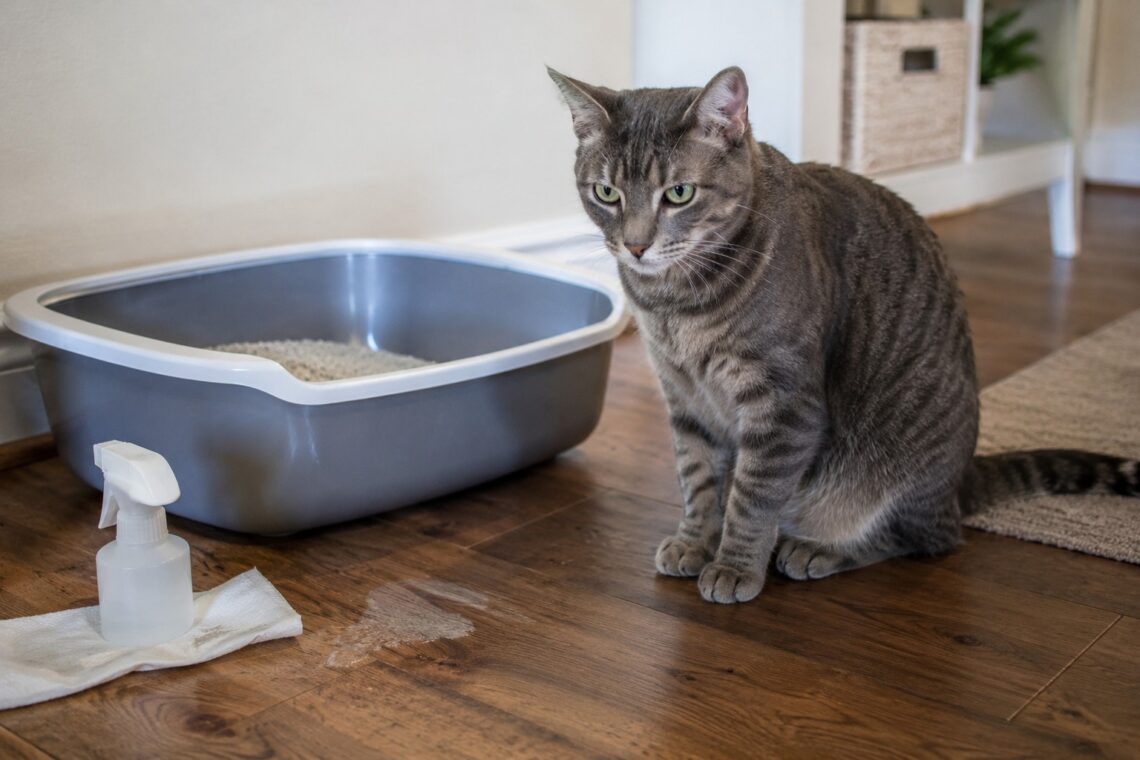
Few things will send a cat parent into full detective mode faster their cat peeing outside the litter box. When a cat suddenly stops using the litter box, it’s easy to assume they’re being stubborn, mad, or “acting out.” Cats do have opinions (strong ones), but inappropriate peeing is usually a sign that something is wrong, either physically, emotionally, or environmentally.
This is definitely one of those situations where it pays to pay attention fast. Sometimes it’s a simple fix. Sometimes it’s your cat’s way of waving a giant red flag. Let’s break down the most common reasons cats pee outside the litter box and what you can do about it.
Before we get into it, though, I want to share my favorite health-monitoring litter that can give you a head’s up when you cat IS using the litter box consistently and maybe catch issues before they start.
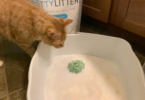
PrettyLitter is a smart, lightweight cat litter with absorbent crystals that trap odors and eliminate moisture. It changes color to monitor your cat's health, detecting issues like UTIs. One 8lb. bag lasts up to 2 months, reducing waste and maintenance. With a low-dust, perfume-free formula, it's ideal for single and multi-cat households.
 LIMITED TIME OFFER
FREE LITTER MAT + 20% OFF

Cat Peeing Outside the Litter Box? First Things First: Rule Out Medical Problems
Medical issues are one of the biggest reasons cats stop using the litter box, especially if the behavior starts suddenly.
Some of the most common health-related causes include:
- Urinary tract infections
- Bladder inflammation (cystitis)
- Urinary crystals or stones
- Kidney disease
- Diabetes
- Arthritis (especially in seniors)
- Stress-induced urinary issues
A cat with a UTI or bladder irritation may associate the litter box with pain. So instead of thinking, “I should pee here,” they think, “Last time I peed there, it hurt like hell. Hard pass.“
Cats are logical like that.
This is also where something like PrettyLitter can be genuinely helpful. PrettyLitter changes color based on your cat’s urine pH and can help flag possible issues like urinary abnormalities, kidney concerns, or inflammation earlier.
It’s not a replacement for a vet (important distinction there), but it can help you catch subtle changes before they turn into bigger problems. And when your cat starts peeing outside the box, having that extra clue can save you some guesswork.
Your Cat Hates the Litter Box Setup
Sometimes the problem isn’t the cat. Sometimes it’s the bathroom.
Cats can be ridiculously particular about litter boxes, and honestly, fair enough. If someone handed you a filthy porta-potty in the middle of a noisy hallway, you’d probably hold it too.
Here’s what might be bothering them:
The box is dirty
This is the big one. Many cats will tolerate a slightly messy box. Others will act like one single clump is a personal betrayal. Scoop daily (or better yet, get a self-cleaning litter box). Fully clean the box regularly.
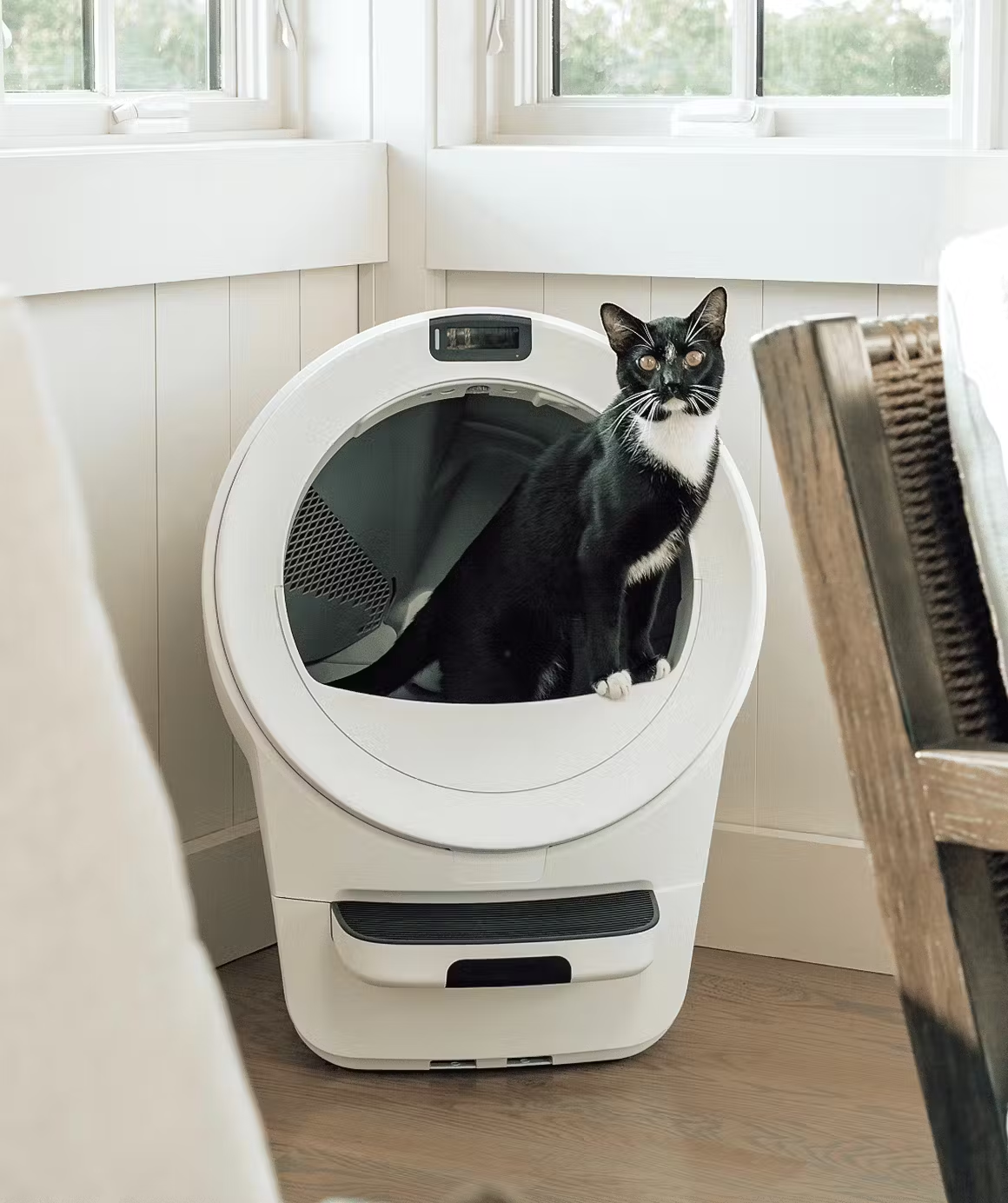
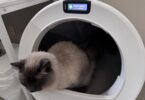
Meet the next generation of smart litter boxes. The Litter-Robot 5 features a sleek LCD display, redesigned waste drawer for fewer empties, customizable lights, and better odor control than ever. Multi-cat ready and app-connected, it’s the perfect balance of convenience, performance, and modern design for any cat household.
⭐ BEST PRICE ON THE WEB⭐
SAVE UP TO $150!
They hate the litter
Cats can dislike:
- Strong scents
- Sharp textures
- Dusty formulas
- Sudden changes
If you switched litter recently and the accidents started after that, there’s your clue. This is another reason some cat owners like PrettyLitter. It’s lightweight, low-dust, and unscented, which works well for picky cats (and picky cats are basically most cats).
The box is too small
A lot of commercial litter boxes are weirdly tiny. Your cat should be able to turn around comfortably, dig, and position themselves without feeling cramped. Big cats especially need more space.
Covered boxes can feel claustrophobic
Some cats love privacy. Others feel trapped. If your cat suddenly avoids a covered box, try removing the lid and see what happens.
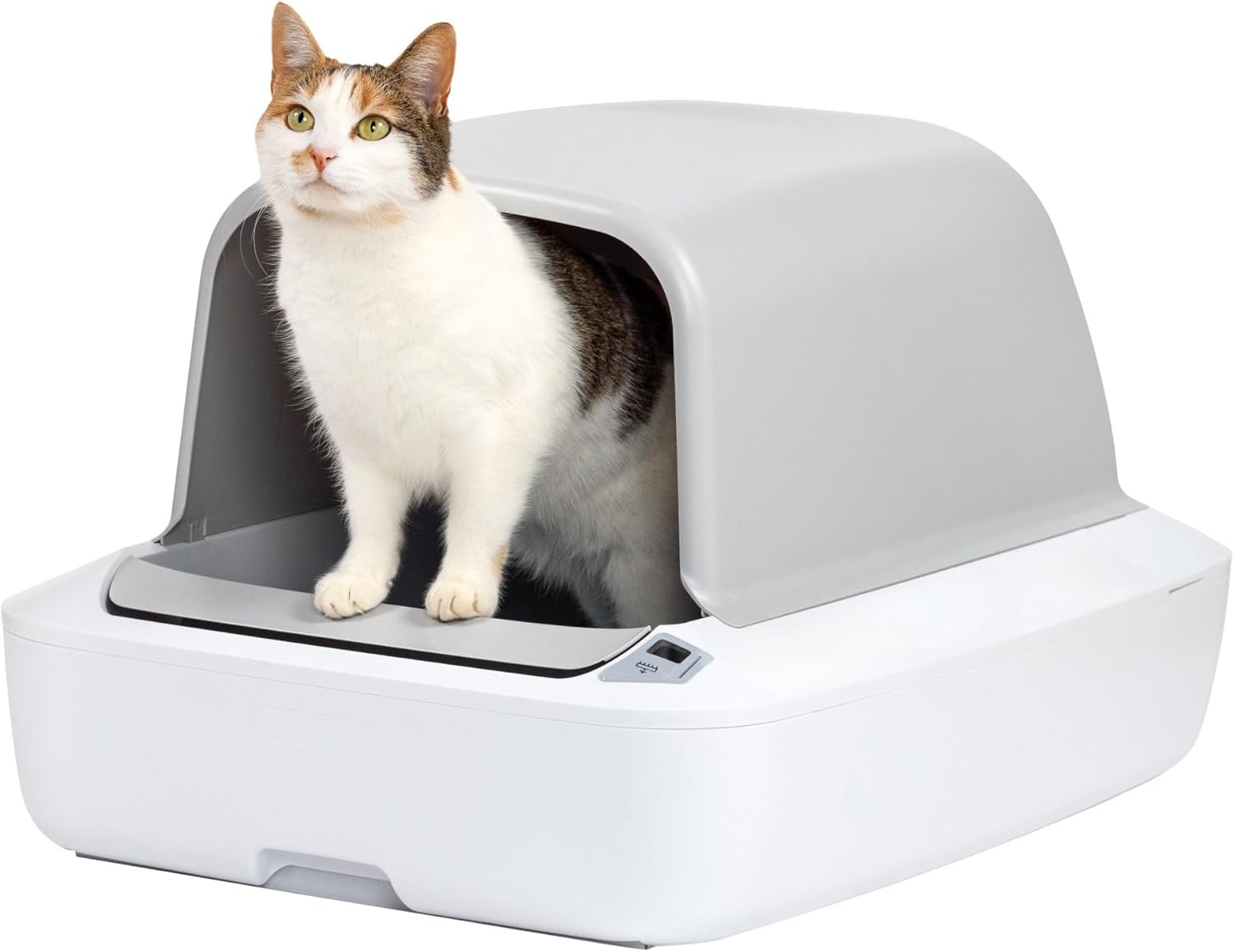
If you’re looking for a good self-cleaning litter box with a removable lid, try the ScoopFree Crystal Pro. FYI, it also works with PrettyLitter.
Eliminate scooping with the ScoopFree® Complete Plus Covered Self-Cleaning Litter Box. Using crystal litter for superior odor control, it absorbs urine and dehydrates solid waste, performing up to five times better than traditional clumping litter. The 99% dust-free, low-tracking crystals keep floors clean, while safety sensors ensure scooping only occurs when your cat is out. Comes with disposable trays with leak-protective linings.
⭐ GUARANTEED BEST PRICE ⭐
USE COUPON CODE MEOW30 AT CHECKOUT TO GET $30 OFF
Location Matters More Than You Think
Cats want their bathroom in a safe, quiet, low-stress place.
Not:
- In a high-traffic hallway
- Beside the barking dog
- Near their food and water
Privacy matters. If your cat feels vulnerable while using the box, they may find a “better” spot. Usually your rug.
Stress and Anxiety Can Trigger It
Cats are creatures of habit. Tiny fuzzy control freaks, really. Changes that seem minor to us can throw them off completely, and stress can cause both behavioral spraying and actual peeing outside the box. Things like having guests over (Leia won’t come out of the office when we have strangers in the house), construction noise, even a change in schedules can trigger it.
Look for other signs too:
- Hiding
- Overgrooming
- Aggression
- Reduced appetite
- Increased meowing
If stress seems like the culprit, focus on stability:
- Keep routines predictable
- Provide hiding spots or vertical spaces
- Use pheromone diffusers
- Make sure each cat has their own food, water, etc.
Multi-Cat Households Can Get Complicated
If you have multiple cats, litter box politics are real.
One cat may:
- Guard the box
- Ambush another cat
- Claim ownership
- Block access
Suddenly someone decides your closet is safer.
The general rule is one litter box per cat, plus one extra. That said, don’t assume that lack of extra litter boxes is the problem. I have 4 cats who share two automatic litter boxes with zero issues. If your cat suddenly starts peeing outside the litter box after sharing one for ages, I’d look into potential health issues before buying another litter box.
Senior Cats May Be Struggling Physically
Older cats can develop mobility issues that make getting into the box harder. Arthritis is a big culprit.
Signs include:
- Peeing right beside the box
- Hesitating before entering
- Trouble climbing into high-sided boxes
Switching to a lower-entry box can make a huge difference. Also keep boxes on every level of the house so they don’t have to make the trek.
Marking vs. Peeing: Know the Difference
Not all out-of-box peeing is the same.
Spraying:
- Usually on vertical surfaces
- Tail upright and twitching
- Smaller amounts
- Often territorial
Urinating:
- Usually on horizontal surfaces
- Squatting posture
- Larger puddles
- Often tied to medical or litter box issues
This difference matters because the solution can be very different.
How to Stop It
Once you identify the cause, here’s how to start fixing it:
1. Schedule a vet visit
Especially if it’s sudden. Always start here.
2. Deep clean accident spots
Use an enzymatic cleaner. Regular cleaners often leave traces your cat can still smell.
And if they smell pee there, they may think, Ah yes, the bathroom.
Kinderbean No-Stress Mess Eraser is a safe, plant-based enzyme cleaner that eliminates tough pet messes—pee, poop, vomit, and more—on carpets, furniture, and hard floors. Each 24 oz bottle includes spray and pour tops. Non-toxic, residue-free, and grapefruit tea tree scented, it’s pet- and family-friendly, created by expert Kristen Levine.

3. Optimize the litter box setup
Think:
- Bigger box
- Better location
- Different litter
- More boxes
- Cleaner boxes
4. Reduce stress
Stability goes a long way. Try to keep feeding times, play sessions, and general household routines as consistent as possible, especially if something big has changed. Cats thrive on predictability, and even small disruptions can make them feel unsettled
5. Monitor changes closely
This is where using a litter like PrettyLitter can be useful because it gives you another layer of information. If your cat’s litter suddenly changes color around the same time they start avoiding the box, that’s valuable context for your vet.
Again, not a diagnosis. Just better intel. And when it comes to cat urinary issues, better intel matters.
When It’s an Emergency
Get immediate vet care if your cat:
- Strains to pee
- Produces little or no urine
- Cries while trying
- Has blood in urine
- Vomits
- Seems lethargic
- Keeps going in and out of the box
For male cats especially, a urinary blockage can become life-threatening fast. This is not a “wait and see” situation.
Final Thoughts
Cats rarely pee outside the litter box “just because.” They’re trying to tell you something, even if they’re using the world’s most frustrating communication method.
Sometimes it’s stress. Sometimes it’s litter box drama. Sometimes it’s a medical issue brewing under the surface. The key is figuring out which one.
Pay attention to patterns, keep their setup cat-friendly, and don’t ignore sudden changes. Tools like PrettyLitter can help you spot potential health shifts earlier, but your vet is still your best resource when things seem off.
Because when your cat starts peeing where they shouldn’t, it’s usually less about rebellion and more about a problem that needs solving.





Leave a Comment