

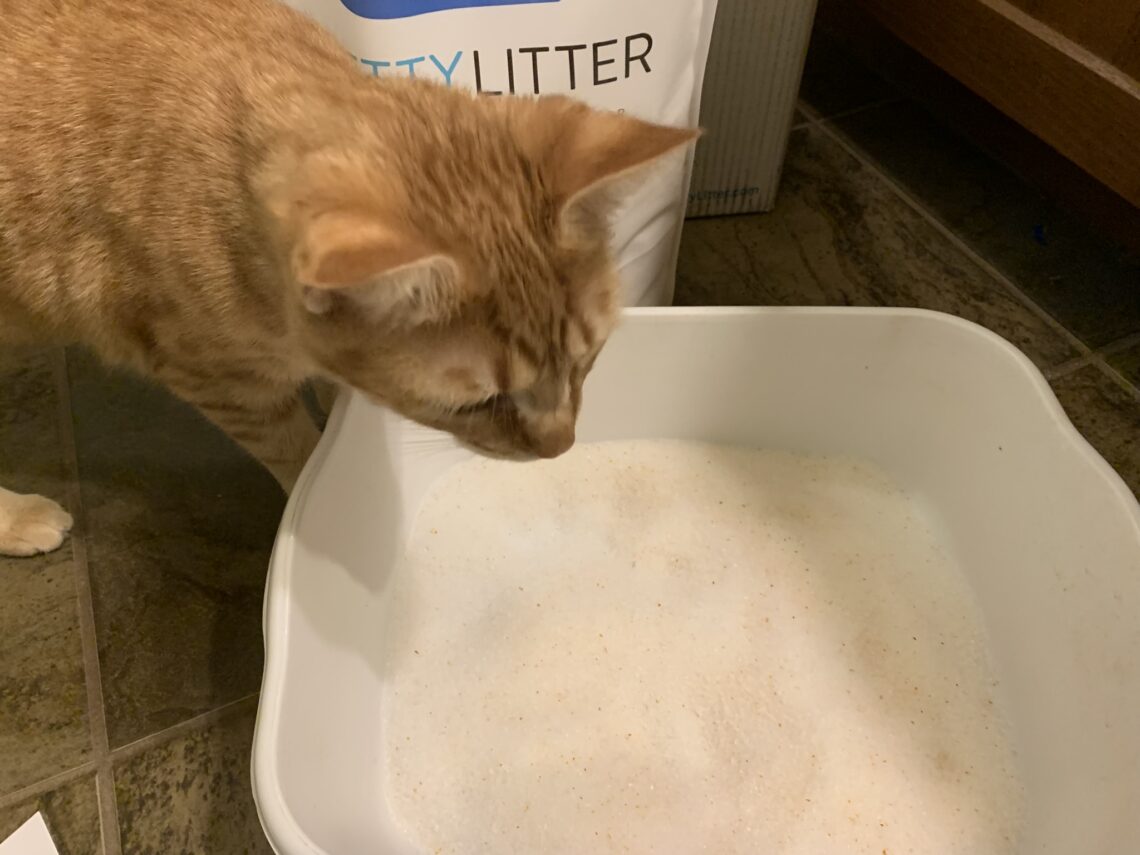
One of PrettyLitter’s biggest selling points is its ability to change color based on your cat’s urine. It’s also one of the reasons new users sometimes panic the first time they see something other than white.
The good news is that a color change doesn’t automatically mean your cat is sick.
PrettyLitter is designed to help you notice changes that might otherwise go unnoticed, especially because cats are incredibly good at hiding illness. Think of it as an early warning system, not a diagnostic tool. It can alert you that something may be worth paying attention to, but it cannot diagnose medical conditions. Only your veterinarian can determine what’s actually causing a urine pH change or the presence of blood.
Here’s what the PrettyLitter colors mean, why they happen, and when it’s worth giving your veterinarian a call.
PrettyLitter is a smart, lightweight cat litter with absorbent crystals that trap odors and eliminate moisture. It changes color to monitor your cat's health, detecting issues like UTIs. One 8lb. bag lasts up to 2 months, reducing waste and maintenance. With a low-dust, perfume-free formula, it's ideal for single and multi-cat households.
 LIMITED TIME OFFER
FREE LITTER MAT + 20% OFF

How PrettyLitter Detects Color Changes
PrettyLitter contains pH-sensitive particles that react when your cat urinates. Urine naturally falls within a certain pH range, but illness, diet, medications, hydration, and other factors can sometimes shift it higher or lower.
Those shifts cause the litter to change color.
It’s important to look at the overall color after the urine has had a chance to absorb into the litter, rather than focusing on tiny flecks or isolated crystals. Also remember that one odd-colored clump isn’t necessarily an emergency. Consistent color changes, especially when combined with symptoms like straining, frequent trips to the litter box, vomiting, hiding, or changes in appetite, deserve prompt veterinary attention.
Check out our PrettyLitter review for more details.
Olive Green to Yellow: The Typical Range
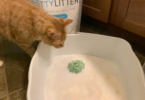
This is the color you want to see. If the litter turns somewhere between olive green and yellow, your cat’s urine is within the typical pH range. For most healthy cats, urine is naturally slightly acidic, generally falling between about pH 6.0 and 6.5, although small day-to-day variations are perfectly normal.
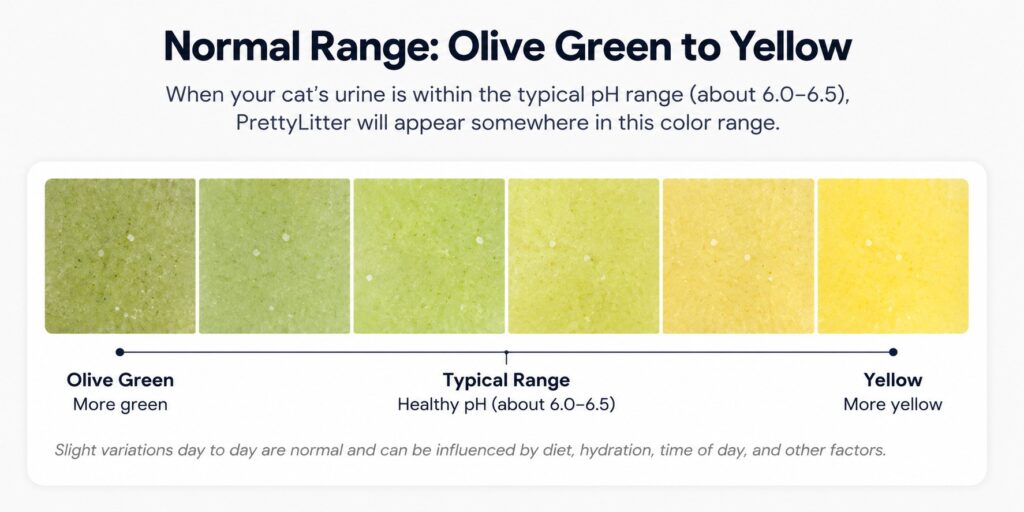
So why does PrettyLitter look green if everything is okay?
That’s simply how the pH indicator is designed. “Green” doesn’t mean your cat’s urine is literally green. It’s just the color the litter displays when the urine falls within the expected range.
Several normal factors can cause slight variations within that yellow-to-olive spectrum, including:
- Diet
- Water intake
- Time of day
- Age
- Normal individual differences between cats
In other words, don’t worry if today’s sample looks a little more yellow and tomorrow’s looks slightly greener. Both can still represent a healthy urine pH.
Blue: Urine Is More Alkaline Than Expected
Blue indicates that your cat’s urine is more alkaline, meaning the pH is higher than the typical range.
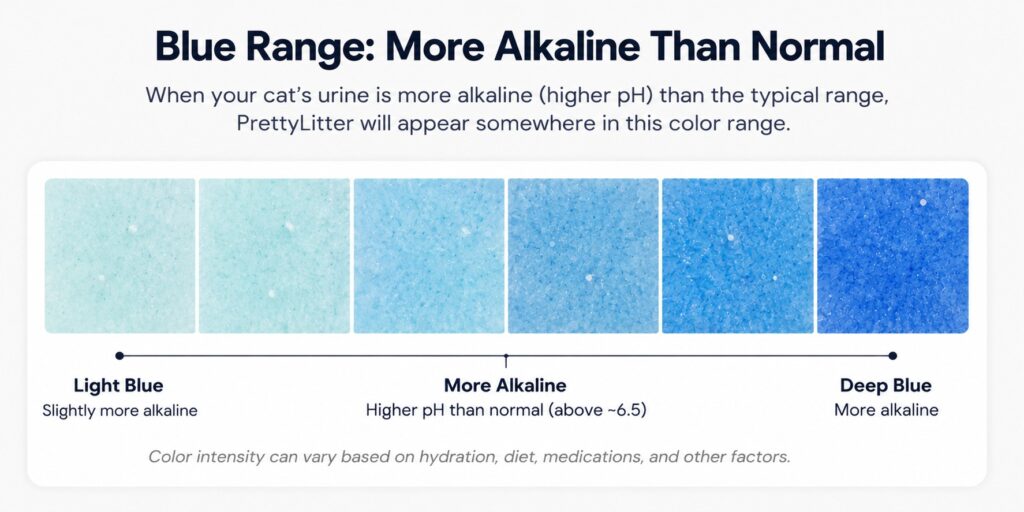
The pH scale runs from 0 to 14:
- Numbers below 7 are acidic.
- A pH of 7 is neutral.
- Numbers above 7 are alkaline (sometimes called basic).
Healthy cat urine is usually slightly acidic. When it becomes more alkaline, PrettyLitter responds by turning blue.
One possible reason is a urinary tract infection (UTI). Certain bacteria can change the chemistry of urine, making it more alkaline.
However, UTIs aren’t the only possibility. More alkaline urine can also be associated with:
- Certain prescription or therapeutic diets
- Some medications
- Bladder inflammation
- Stress-related urinary issues
- Individual variation
It’s also worth noting that true bacterial UTIs are actually less common in healthy younger cats than many people realize. They’re seen more often in senior cats or cats with underlying medical conditions such as diabetes or kidney disease.
When should you worry about blue?
If you notice a single blue spot and your cat is acting completely normal, keep an eye on things over the next day or so.
If the blue color continues to appear, or your cat is also:
- Straining to urinate
- Urinating very small amounts
- Visiting the litter box repeatedly
- Crying while urinating
- Grooming the genital area excessively
- Hiding or acting painful
it’s time to contact your veterinarian.
For male cats especially, urinary problems can become life-threatening if they develop a blockage. If your male cat repeatedly strains without producing urine, seek emergency veterinary care immediately.
Orange: Urine Is More Acidic Than Expected
Orange means the urine is more acidic than PrettyLitter’s expected range.
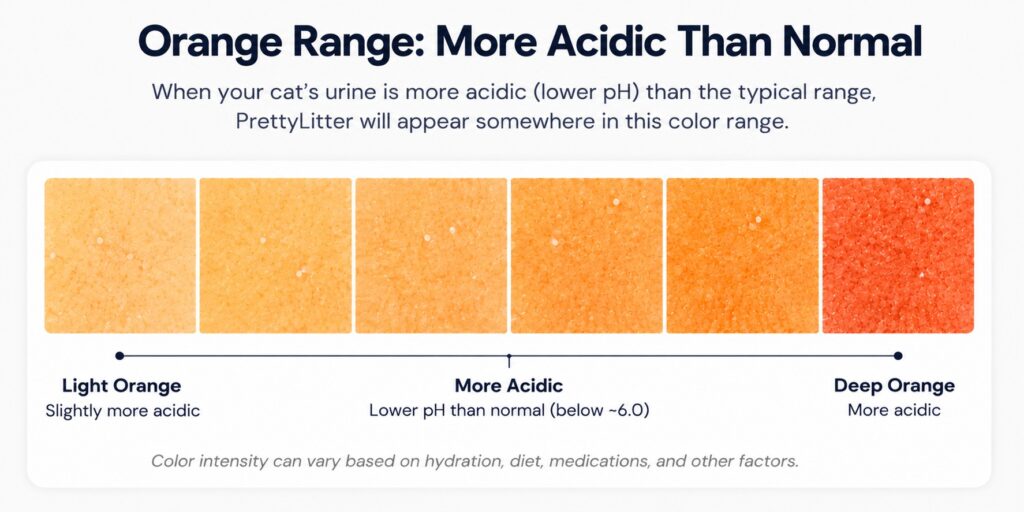
While healthy cat urine is naturally somewhat acidic, an unusually low pH can sometimes be associated with conditions that increase the risk of urinary crystal or bladder stone formation.
More acidic urine may be seen with:
- Certain types of urinary crystals
- Bladder stones
- Some prescription urinary diets
- Diet changes
- Certain metabolic conditions
The important thing to remember is that orange does not automatically mean your cat has bladder stones. It simply indicates that the urine is more acidic than expected, and that finding deserves attention if it continues.
As with blue, look at the whole picture. If your cat is eating, drinking, urinating normally, and acting like their usual self, monitor for repeat color changes. If orange continues to appear or your cat develops urinary symptoms, schedule a veterinary appointment.
Red: Visible Blood in the Urine
Because PrettyLitter is bright white, visible blood stands out as red.
This is probably the color that gets everyone’s attention (for good reason).
Blood in the urine can happen for several reasons, including:
- Urinary tract infections
- Bladder inflammation (cystitis)
- Urinary crystals
- Bladder stones
- Trauma
- Urinary obstruction
- Less commonly, tumors or other serious conditions
Sometimes only a tiny amount of blood is present, and PrettyLitter makes it much easier to notice than traditional clay litter.
If you see red in the litter, it’s best to contact your veterinarian for guidance. Blood in the urine should never be ignored, even if your cat otherwise seems okay.
If your cat is straining to urinate, producing little or no urine, crying in the litter box, or appears distressed, seek emergency veterinary care immediately.
Can Diet Affect PrettyLitter Colors?
Yes. A cat’s diet can influence urine pH, which is one reason veterinarians sometimes prescribe special urinary diets for cats with certain bladder conditions.
Hydration also plays a role. Cats that drink more water generally produce more dilute urine, while dehydrated cats produce more concentrated urine.
Because so many factors influence urine pH, PrettyLitter shouldn’t be viewed as a diagnosis. It’s simply one piece of information that can help you decide whether your cat may need further evaluation.
Should You Mix PrettyLitter With Another Litter?
No. PrettyLitter specifically recommends using it by itself. Mixing it with clay, crystal, or other litters can:
- Make color changes harder to see
- Reduce the accuracy of the indicator
- Affect the litter’s overall performance
If you’re using PrettyLitter for its health-monitoring feature, it’s best to use it on its own.
The Bottom Line
PrettyLitter gives cat owners something they’ve never really had before: an easy way to notice changes in urine chemistry during everyday litter box cleaning.
That’s genuinely useful, especially since cats often hide illness until they’re feeling pretty miserable.
Just remember that color changes are clues, not diagnoses. A blue, orange, or red patch doesn’t tell you exactly what’s wrong, and a normal green or yellow color doesn’t guarantee your cat is perfectly healthy. The litter is one tool among many, and it’s most helpful when you consider it alongside your cat’s behavior, appetite, water intake, and litter box habits.
When in doubt, trust your instincts. If something about your cat seems off, even if the litter looks completely normal, it’s always worth talking to your veterinarian.
PrettyLitter is a smart, lightweight cat litter with absorbent crystals that trap odors and eliminate moisture. It changes color to monitor your cat's health, detecting issues like UTIs. One 8lb. bag lasts up to 2 months, reducing waste and maintenance. With a low-dust, perfume-free formula, it's ideal for single and multi-cat households.
LIMITED TIME OFFER
FREE LITTER MAT + 20% OFF


Leave a Comment